English
  español
  français
  português
  русский
  العربية
  简体中文
简体中文 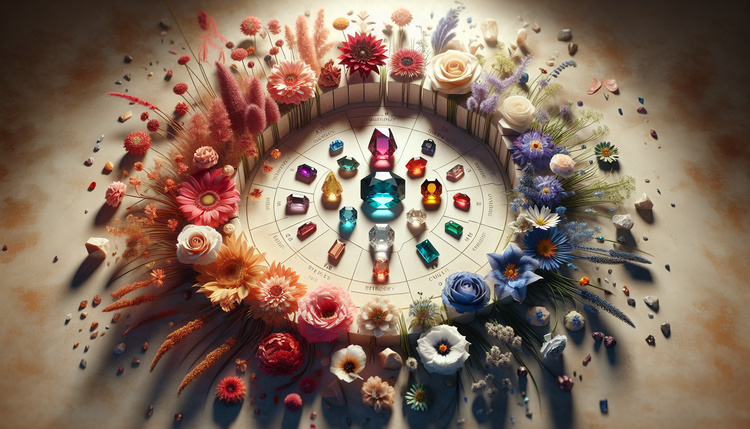
Birthstones and birth flowers pair a person’s birth month with symbols of meaning, color, and story. Rooted in centuries of tradition, they’ve evolved across cultures—yielding modern and traditional lists—and inspire today’s birthday gifts, content calendars, and commemorations. Below, explore the origins, global variations, month-by-month meanings, and practical tips for using them beautifully and accurately.
What are birthstones and birth flowers?
Birthstones are gemstones associated with each calendar month, believed historically to confer virtues like protection or wisdom. Birth flowers are botanical counterparts that carry the language of the seasons and Victorian floriography—expressing affection, hope, and character. Together, they offer a month-by-month shorthand for celebrating identity and milestones.
Where these month-by-month symbols came from
The long arc of birthstones
The idea of linking stones to time and personality goes back millennia. A common reference point is the high priest’s breastplate described in ancient texts, set with 12 stones that later inspired connections to tribes, zodiac signs, and months. Over centuries, European, Middle Eastern, and South Asian traditions emphasized either gemstone species or symbolic color.
Modern birthstone lists coalesced in the 20th century. In 1912, the American National Association of Jewelers (now Jewelers of America) published a list to standardize retail guidance. Subsequent U.S. updates in the mid-20th century added alternates (for example, alexandrite for June, tourmaline for October, citrine for November) and adjusted December’s options (zircon replacing lapis). In 2002, tanzanite was added for December, and in 2016, spinel became an official alternate for August alongside peridot and sardonyx. The goal has often been to balance tradition, availability, and consumer preference.
How birth flowers took root
Birth flowers are largely Victorian in flavor, shaped by the 19th-century fascination with floriography—the “language of flowers.” Monthly associations also reflect seasonal bloom cycles in Europe and North America. Lists vary by region (for instance, January’s flower is a carnation in the U.S. and a snowdrop in the U.K.), but the core idea is consistent: each month carries a flower symbolizing virtue and sentiment.
Global variations you’ll see
- United States vs. United Kingdom: Birthstone lists are broadly similar; U.K. jewelers adopted a standardized list in the 1930s, later aligning with modern additions like tanzanite and spinel. Birth flowers differ more visibly—e.g., January’s carnation (U.S.) versus snowdrop (U.K.).
- Japan: A 2021 refresh expanded the official list, highlighting stones popular in Japanese jewelry culture (and offering more choice for each month).
- Color-first traditions: In parts of Central and Eastern Europe, color symbolism sometimes matters more than species—e.g., a blue stone standing in for sapphire when the gem itself is impractical.
- Astrological and cultural alternates: Ayurvedic, zodiac, and navaratna traditions map stones to planets and signs rather than birth months; gift-givers may choose those instead of—or alongside—monthly birthstones.
Traditional vs. modern: what changed and why it matters
Traditional lists often prioritize historical associations (e.g., bloodstone for March, sardonyx for August). Modern lists add stones that are more fashionable, available, or durable, while keeping the spirit of the original meanings. If you’re creating content or gifts:
- Offer both “traditional” and “modern” options where the month has multiples.
- Note common alternates used in different countries (e.g., December’s tanzanite is a recent, popular addition).
- When in doubt, include the color family (e.g., “October: opalescent or pink tones”) to keep aesthetic cohesion across designs.
Month-by-month guide: stones, flowers, meanings, and easy gift ideas
Below you’ll find widely recognized modern pairings with notable traditional or regional alternates. Meanings reflect long-standing symbolism rather than strict rules.
January
- Birthstone: Garnet (modern and traditional). Known for deep reds but occurs in many colors; symbolizes protection and constancy.
- Alternates: Variations within garnet (almandine, pyrope) for color nuance.
- Birth flower: Carnation (U.S.) or Snowdrop (U.K.). Carnation = admiration and devotion; Snowdrop = hope and resilience.
- Gift ideas: Red garnet pendant; winter bouquet of white snowdrops and dusty miller; journal embossed with a garnet-toned monogram.
February
- Birthstone: Amethyst. Associated with clarity, sincerity, and calm.
- Birth flower: Violet or Primrose. Violet = modesty and faithfulness; Primrose = young love.
- Gift ideas: Amethyst studs; pressed-violet stationery; lavender-scented candles for a soothing theme.
March
- Birthstone: Aquamarine (modern); Bloodstone (traditional). Aquamarine = serenity and safe passage; Bloodstone = courage and vitality.
- Birth flower: Daffodil (also called jonquil). Symbolizes rebirth and cheerful beginnings.
- Gift ideas: Sea-hued aquamarine ring; spring bouquet of daffodils; travel pouch or passport cover in aquamarine tones.
April
- Birthstone: Diamond (modern). Traditionally, rock crystal quartz appears in older lists as a more accessible stand-in. Diamond = strength and clarity.
- Birth flower: Daisy or Sweet Pea. Daisy = innocence and loyalty; Sweet Pea = gratitude and delight.
- Gift ideas: Diamond or white-sapphire necklace; daisy-themed enamel pin; crystal paperweight for a symbolic desk gift.
May
- Birthstone: Emerald. Signifies growth, wisdom, and harmony.
- Alternates: Some traditions recognize other green stones (e.g., chrysoprase) when emerald is out of reach.
- Birth flower: Lily of the Valley and Hawthorn. Sweetness, humility, and hope.
- Gift ideas: Emerald-hued jewelry (including lab-created for affordability); vintage-style hawthorn botanical print; spring garden kit.
June
- Birthstones: Pearl, Alexandrite, and Moonstone (modern). Pearl = purity and wisdom; Alexandrite = balance and transformation; Moonstone = intuition and new beginnings.
- Birth flower: Rose and Honeysuckle. Rose = love in its many forms; Honeysuckle = sweet bonds and enduring affection.
- Gift ideas: Classic pearl strand or modern pearl hoops; color-shifting alexandrite ring; rose bouquet or rosewater skincare set.
July
- Birthstone: Ruby. Embodies passion, protection, and leadership.
- Birth flower: Larkspur (often) and Water Lily (alternate). Larkspur = levity and positivity; Water Lily = peace and purity.
- Gift ideas: Ruby pendant; watercolor print of water lilies; picnic set in ruby-red textiles.
August
- Birthstones: Peridot (modern), Sardonyx (traditional), Spinel (modern addition, 2016). Peridot = vitality and abundance; Sardonyx = courage; Spinel = resilience and renewal.
- Birth flower: Gladiolus and Poppy. Gladiolus = strength of character; Poppy = remembrance and imagination.
- Gift ideas: Peridot studs; striped sardonyx signet; gladiolus bouquet in a tall vase.
September
- Birthstone: Sapphire. Symbolizes truth, loyalty, and insight; blue is classic, but sapphires come in many colors.
- Birth flower: Aster and Morning Glory. Aster = wisdom and patience; Morning Glory = affection that grows with time.
- Gift ideas: Blue-sapphire pendant; aster seed packets; morning glory trellis starter kit.
October
- Birthstones: Opal and Tourmaline (often pink). Opal = creativity and hope; Tourmaline = compassion and balance.
- Birth flower: Marigold and Cosmos. Marigold = bold warmth; Cosmos = harmony and order.
- Gift ideas: Opal in protective settings (doublets or bezel mounts); pink-tourmaline bracelet; marigold-dyed textiles.
November
- Birthstones: Topaz (often golden) and Citrine. Topaz = fidelity and strength; Citrine = abundance and optimism.
- Birth flower: Chrysanthemum. Signifies longevity, loyalty, and joy; hues vary by region.
- Gift ideas: Honey-hued topaz necklace; citrine cocktail ring; chrysanthemum tea set.
December
- Birthstones: Turquoise, Zircon, and Tanzanite (added in 2002). Turquoise = protection and good fortune; Zircon (available in many colors) = clarity; Tanzanite = insight and transformation.
- Birth flower: Narcissus (especially paperwhite) and Holly. Narcissus = hope and renewal; Holly = cheer and goodwill.
- Gift ideas: Turquoise in silver; tanzanite studs for winter sparkle; paperwhite bulbs for forcing indoors.
How these symbols shape modern gifts and celebrations
Birthstones and birth flowers simplify personalization. Whether you’re gifting jewelry, curating a bouquet, or designing a birthday post, the month gives you a ready-made palette and story. Jewelers lean on modern lists for consistent inventory, while florists adapt by season and region (e.g., substituting similar hues when certain blooms are out of season). Online, these symbols drive search interest every month—especially around graduation seasons (May–June) and the holiday period (November–December).
Quick tips for buying and gifting
- Mix tradition and taste: If opal sensitivity worries you for October, consider tourmaline; for April, white sapphire or moissanite can be budget-friendly sparkle.
- Think color family: A sapphire-blue scarf or garnet-red journal still nods to the month without requiring a gemstone purchase.
- Seasonal flowers: If daffodils aren’t available in March where you live, opt for similar spring yellows or a potted bulb that will rebloom.
- Ethical choices: Look for lab-grown or responsibly sourced gems, and consider local or sustainably grown flowers.
Using birthstones and birth flowers in calendars and “On This Day” features
Editorial and content strategy
- Create a monthly template: For each month, include the stone, flower(s), short meaning, color swatch, and a one-line “why it matters.”
- Alternate lists side-by-side: Note “Modern” vs. “Traditional” stones and U.S. vs. U.K. flowers to cover global audiences.
- Visual consistency: Use a primary color (stone), a secondary color (flower), and a texture (petal, crystal facet) for your graphics.
- Evergreen snippets: Prewrite a single sentence per month (e.g., “September’s sapphire symbolizes truth—pair it with asters for a classic birthday bouquet.”) for social captions.
- Data blocks: Add a small pronunciation guide (e.g., “peridot: PEH-ri-doh”) and a maintenance note (e.g., “Opals prefer gentle wear”).
Product and e-commerce ideas
- Build monthly bundles: Combine a gemstone piece, a floral item, and a card explaining the symbolism.
- Offer personalization: Engrave initials alongside a tiny birthstone; add a pressed-flower insert for a tactile unboxing moment.
- Schedule reminders: Automate “On This Day” emails with the month’s stone/flower and a curated gift collection.
For educators and museums
- Context panels: Place timeline graphics showing ancient roots through the 1912 and later updates.
- Compare-and-contrast: Display U.S., U.K., and Japanese lists to show how culture and commerce shape tradition.
Common variations and how to present them clearly
- October’s duality: “Opal or tourmaline—choose opalescent iridescence or pink radiance.”
- June’s trio: Explain pearls (organic gem), alexandrite (color-change), and moonstone (sheen) to cover different budgets and aesthetics.
- August updates: Note that spinel joined in 2016—use this as a “Did you know?” for engagement.
- December options: Turquoise (historic), zircon (sparkle), and tanzanite (new classic) let people pick a vibe.
Quick reference: modern birthstones and common birth flowers
Modern U.S.-aligned birthstones with widely cited flowers:
- Jan: Garnet; Carnation/Snowdrop
- Feb: Amethyst; Violet/Primrose
- Mar: Aquamarine (Bloodstone alt); Daffodil
- Apr: Diamond; Daisy/Sweet Pea
- May: Emerald; Lily of the Valley/Hawthorn
- Jun: Pearl, Alexandrite, Moonstone; Rose/Honeysuckle
- Jul: Ruby; Larkspur/Water Lily
- Aug: Peridot, Sardonyx, Spinel; Gladiolus/Poppy
- Sep: Sapphire; Aster/Morning Glory
- Oct: Opal, Tourmaline; Marigold/Cosmos
- Nov: Topaz, Citrine; Chrysanthemum
- Dec: Turquoise, Zircon, Tanzanite; Narcissus/Holly
Final thought
The beauty of birthstones and birth flowers is that they’re both timeless and flexible. Use them to anchor a gift, a design palette, or a story—and don’t be afraid to mix traditional lists with modern tastes. When you pair meaning with color and season, you get birthday traditions that feel personal, memorable, and enduring.
FAQ
Which birthstone list is “official”—traditional or modern?
There isn’t a single global authority. Jewelers of America popularized a modern U.S. list in 1912 with later updates, while other countries publish their own. It’s best to present both traditional and modern options and note regional preferences.
Are birth flowers the same worldwide?
No. Core ideas overlap, but lists vary by region because bloom seasons and cultural meanings differ. For example, January is a carnation month in the U.S. and a snowdrop month in the U.K.
What if I can’t find the exact gemstone?
Choose a look-alike in the same color family (e.g., white sapphire for April’s diamond, lab-grown alternatives, or glass/crystal accents). The color story keeps the meaning intact.
Are opals too fragile for everyday wear?
Opals are softer and should be treated gently. Opt for protective settings (bezels), earrings or necklaces (less impact), or choose tourmaline as an October alternate for daily rings.
Can I combine a birthstone and birth flower in one gift?
Absolutely. Popular combos include a gemstone pendant with a pressed-flower card, or a bouquet tied with a ribbon in the stone’s color. It’s an elegant way to personalize a birthday.
Do zodiac stones replace monthly birthstones?
They’re parallel systems. Zodiac or planetary stones match astrological signs, while birthstones match months. Many people enjoy both—especially if a zodiac gem resonates more strongly.
What’s new in recent lists?
Key modern additions include tanzanite for December (2002) and spinel for August (2016). Japan also expanded its official list in 2021, offering more month-by-month options.