English
  español
  français
  português
  русский
  العربية
  简体中文
简体中文 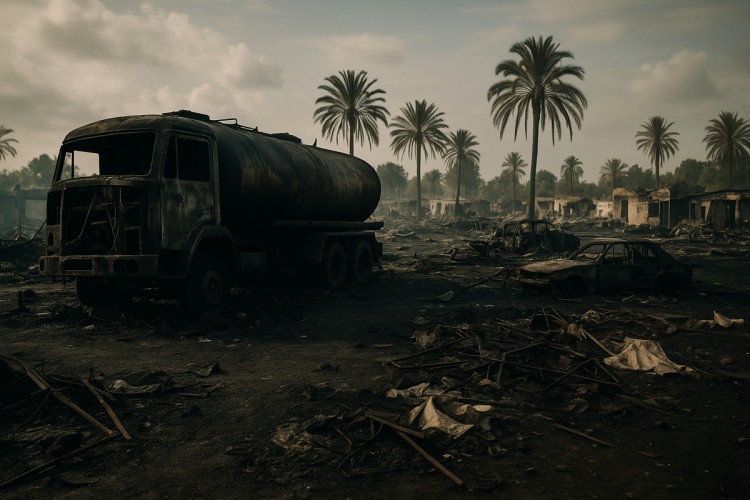
The Los Alfaques disaster was a catastrophic road accident and tanker explosion on 11 July 1978 at the Los Alfaques seaside campsite in Alcanar, near Tarragona, Spain. A truck loaded with liquefied propylene ruptured and exploded next to the busy coastal campground, sending a fireball across caravans and the beach. In minutes, 217 people (including the driver) lost their lives and over 200 more suffered severe burns.
Often cited as one of Europe’s deadliest road-transport industrial accidents, the Los Alfaques campsite explosion reshaped how hazardous materials are transported and how land near major roads and tourist sites is planned for safety.
Overview and quick facts
- Date: 11 July 1978
- Location: Los Alfaques campsite, Alcanar (Tarragona province), at km 159 of the N-340 national road, about 2 km south of Sant Carles de la Ràpita, Spain
- Vehicle and cargo: Tanker truck carrying about 23 tons of liquefied propylene (a highly flammable gas)
- Event: Road incident followed by a BLEVE (boiling liquid expanding vapor explosion)
- Fatalities: 217 (including the driver)
- Injuries: More than 200 severely burned
- Victims: Mostly vacationers and families, including Spanish and foreign tourists
- Setting: A popular Mediterranean coastal campsite adjacent to a busy arterial road (N-340)
Where and how it happened
In the late 1970s, the N-340 was a primary east–west artery along Spain’s Mediterranean coast, carrying heavy tourist traffic in summer and commercial freight year-round. The Los Alfaques campsite sat just meters from the road, with pitches and caravans extending toward the beach. On a hot Tuesday in July—peak holiday season—the campground was densely occupied.
Shortly before midday, a tanker truck transporting liquefied propylene passed the campsite. Near its entrance, a road incident led to a sudden failure of the tank. The rapidly escaping propylene formed a flammable vapor cloud that ignited, producing a violent explosion and an immense fireball that swept through the campsite and onto the beach.
The chain of events
While second-by-second details vary by witness account, investigators concluded that a combination of factors primed the tragedy:
- High-energy cargo: Liquefied propylene is stored under pressure. If containment fails, it expands rapidly and, if ignited, can explode.
- Tank failure near a crowded site: The rupture occurred alongside a packed tourist campground at midday.
- Rapid vapor release and ignition: The escaping gas created a flammable cloud that ignited within moments.
The resulting fireball engulfed caravans, tents, vehicles, and beachgoers. The intense heat was felt hundreds of meters away. Survivors recalled a roar, blinding light, and an overwhelming wave of heat; many ran toward the sea for refuge, while first responders and bystanders rushed to pull victims from burning debris.
Why did the tanker explode? Understanding BLEVE
The Los Alfaques disaster is often described as a classic BLEVE—short for Boiling Liquid Expanding Vapor Explosion. In a BLEVE, a pressurized vessel containing a liquid above its normal boiling point suddenly ruptures. The hot liquid flashes into vapor, the pressure skyrockets, and a shock wave and fireball can follow if the material is flammable.
Key ingredients in a BLEVE
- Pressurized, superheated liquid: Liquefied propylene is stored at pressure to keep it in liquid form.
- Loss of containment: A rupture or failure allows the liquid to depressurize and boil violently.
- Ignition source: Sparks, friction, engines, or existing fires can ignite the vapor cloud.
In 1978, safety standards and practices for hazardous-cargo transport were less mature than today. Subsequent investigations pointed to overfilling and safety valve shortcomings as aggravating factors, compounded by summer heat and the proximity of large crowds. The confluence of these conditions produced a devastating fireball and blast.
Human impact: victims, survivors, and first responders
The human toll was extraordinary. Most of the 217 who died were holidaymakers—families, couples, and children—from Spain and across Europe. More than 200 survivors suffered severe burns, many over large portions of their bodies, requiring urgent evacuation to hospitals across Catalonia, Valencia, and beyond. The scale of triage and burn care stretched regional medical systems.
Identification was painfully difficult. Many victims had arrived in caravans and tent sites with minimal documentation. Emergency teams, local authorities, and foreign consular staff worked together to identify the deceased and to reunite families separated in the chaos.
What survivors recalled
- Instantaneous heat: Accounts describe the fireball as instant, leaving little time to react.
- Flight toward the water: Many ran to the beach or into the sea to escape flames and heat.
- Community action: Residents, tourists, and first responders pulled people from wreckage and improvised first aid while ambulances, firefighters, and the military mobilized.
Emergency response
Local fire brigades, the Guardia Civil, medical teams, and neighbors formed the immediate response. Helicopters and convoys of ambulances ferried the injured to specialized burn units. Blood donation drives were organized across the region. Despite the speed and bravery of responders, the intensity of the burns and the initial blast left little chance for many victims.
Investigations, responsibility, and legal outcomes
Spanish authorities opened inquiries into the tanker’s loading, equipment, and route. Findings cited multiple safety shortcomings, including overloading relative to safe operating limits and the unsuitability or failure of relief and protection systems for the cargo being carried. These factors, combined with road conditions and summer heat, were identified as key contributors to the explosion’s severity.
Compensation processes for victims and families followed, alongside debates about liability among the transport company, cargo supplier, and regulators. The tragedy exposed gaps in oversight and emergency planning for hazardous goods moving through crowded tourist zones.
Regulatory and industry changes
The Los Alfaques disaster accelerated changes in Spain and across Europe in how dangerous goods are transported by road. While reforms unfolded over years, several themes became standard practice:
- Stricter loading and filling limits: Clear maximum fill levels to account for thermal expansion.
- Improved pressure-relief devices: Better valves, inspection regimes, and compatibility with specific cargoes.
- Routing and land-use controls: Preference for bypass routes away from dense public spaces; restrictions on hazardous loads near campsites, schools, and resorts.
- Driver training and certification: Enhanced qualifications for hazardous-materials drivers and regular refreshers.
- Emergency planning: Better coordination protocols, communication systems, and specialized response equipment for BLEVEs and chemical incidents.
The site today and memorials
The Los Alfaques campsite, located at km 159 of the N-340 and about 2 km south of Sant Carles de la Ràpita, was rebuilt and modernized in the years after the disaster. The campground remains in operation today. Memorials and acts of remembrance honor the victims, and commemorations are held each July to mark the anniversary and reflect on the lessons learned.
Why the Los Alfaques disaster still matters
Beyond the immediate grief, the 1978 explosion became a turning point in European road safety and hazardous-cargo regulation. It is studied in engineering, emergency management, and urban planning as a case where multiple manageable risks—overfilling, equipment shortcomings, route choice, and proximity to crowds—aligned with devastating consequences.
Its legacy is a set of hard-won safety improvements and a reminder that hazardous materials, while essential to modern life, must be handled with uncompromising care—especially where public spaces and busy travel routes meet.
Key takeaways
- The Los Alfaques disaster was a 1978 tanker BLEVE beside a crowded seaside campsite in Spain.
- It killed 217 people and severely injured more than 200, most of them tourists on summer holidays.
- Investigations highlighted overfilling and safety-system shortcomings, catalyzing reforms in hazardous-goods transport, routing, and emergency response.
- The campsite was rebuilt and still operates; memorials commemorate the victims annually.
FAQ
What was the Los Alfaques disaster?
It was a catastrophic road accident and tanker explosion on 11 July 1978 next to the Los Alfaques campsite in Alcanar, near Tarragona, Spain. A propylene tanker ruptured, ignited, and produced a massive fireball that devastated the campsite and beach.
How many people were killed and injured?
In total, 217 people, including the truck driver, were killed. More than 200 others suffered severe burns and injuries.
What caused the explosion?
The explosion was a BLEVE—boiling liquid expanding vapor explosion—triggered by the sudden failure of a tanker carrying liquefied propylene. Overfilling and safety-system shortcomings, together with summer heat and an ignition source, contributed to the severity.
Where exactly did it occur?
At km 159 along Spain’s N-340 national road, roughly 2 km south of Sant Carles de la Ràpita, beside the Los Alfaques seaside campsite in Alcanar (Tarragona province).
Who were the victims?
Most were vacationers—Spanish and foreign tourists—staying in caravans and tents at the campsite or enjoying the adjacent beach at midday.
What safety changes followed?
The disaster accelerated reforms in hazardous-goods transport, including stricter loading limits, improved pressure-relief devices and inspections, designated routing away from crowded areas, better driver training, and more robust emergency planning.
Is the Los Alfaques campsite still open today?
Yes. The campsite was rebuilt and renovated after the disaster and continues to operate, with memorials that honor those who lost their lives.