
 English
  español
  français
  português
  русский
  العربية
  简体中文
简体中文 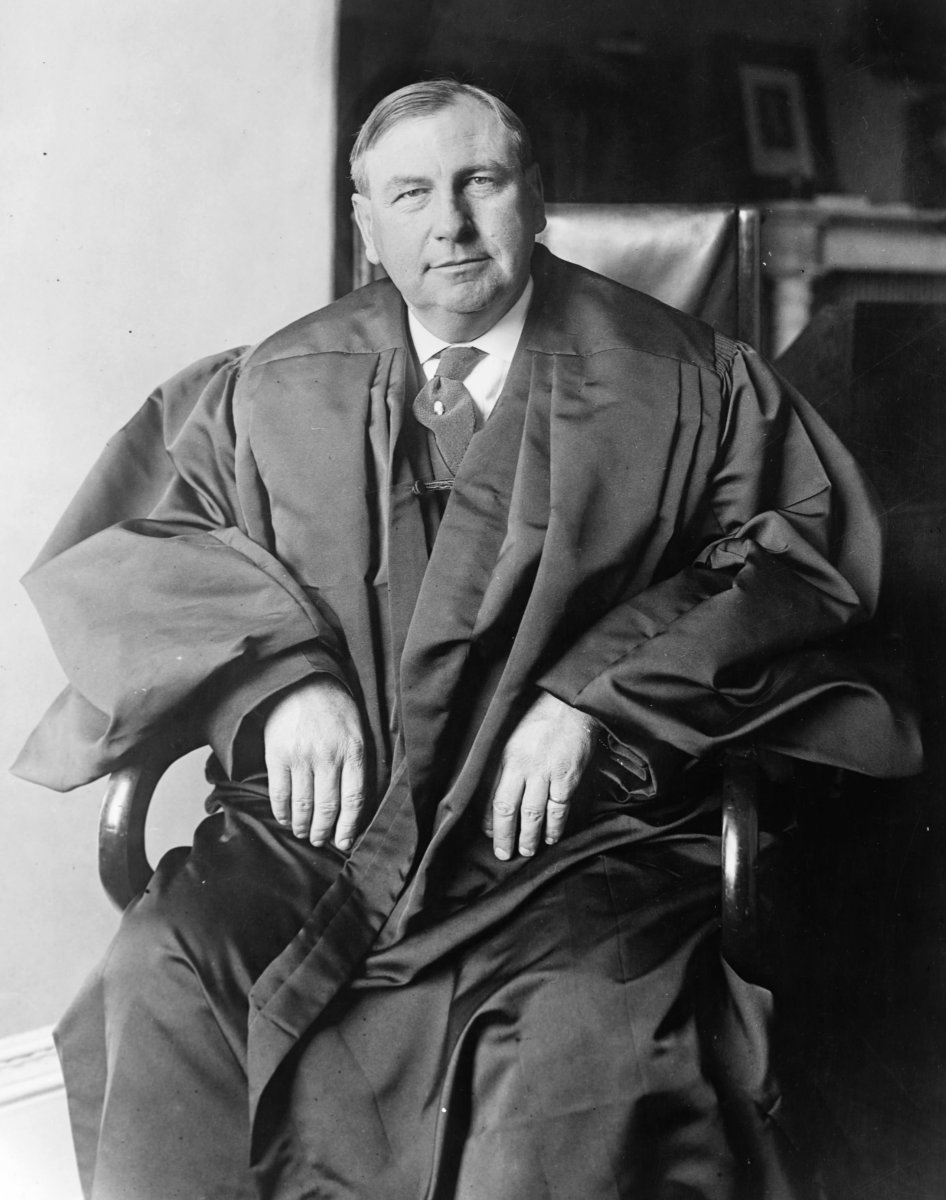
Harlan Fiske Stone, born on October 11, 1872, and passing away on April 22, 1946, stands as a notable figure in American legal history, a distinguished lawyer and jurist whose career culminated in serving as the 12th Chief Justice of the United States. His journey through the highest echelons of American law saw him transition from a respected academic and private practitioner to a pivotal figure in both the executive and judicial branches of the federal government. Stone’s contributions, marked by a commitment to legal integrity and a nuanced approach to constitutional interpretation, left an indelible mark on American jurisprudence.
Hailing from western Massachusetts, Stone's early life laid the foundation for a remarkable intellectual and professional trajectory. After attending Amherst College, where he forged a lifelong connection with future President Calvin Coolidge, he pursued his legal education at Columbia Law School. His academic prowess quickly translated into professional success; he established a distinguished career in New York City, becoming a prominent partner at the prestigious law firm of Sullivan & Cromwell and later the dean of Columbia Law School. These early experiences honed his analytical skills and deep understanding of legal principles, preparing him for national service. During World War I, Stone lent his expertise to the War Department Board of Inquiry, a sensitive role evaluating the sincerity of conscientious objectors, demonstrating his early involvement in matters of national importance and individual rights.
A Reform-Minded Attorney General
In 1924, a pivotal moment arrived when his former college acquaintance, President Calvin Coolidge, appointed Stone as the U.S. Attorney General. Stone assumed this role during a tumultuous period for the Department of Justice, which had been tarnished by a series of high-profile scandals, most notably the Teapot Dome scandal, that occurred under the preceding administration of President Warren G. Harding. Recognizing the urgent need to restore public trust and institutional integrity, Stone embarked on a determined mission to reform the department. He diligently worked to professionalize its operations, eliminate corruption, and reassert the department's impartiality. Furthermore, demonstrating his commitment to fair market practices, he actively pursued several significant antitrust cases against large corporations, underscoring his belief in a balanced economic landscape.
From Associate Justice to the "Three Musketeers"
His tenure as Attorney General was brief but impactful. In 1925, President Coolidge nominated Stone to the Supreme Court as an Associate Justice, succeeding the retiring Justice Joseph McKenna. Stone's sterling reputation and demonstrated integrity ensured his confirmation by the Senate with minimal opposition. On the Supreme Court, he quickly aligned himself with influential jurists like Justices Oliver Wendell Holmes Jr. and Louis Brandeis, becoming a vocal proponent of judicial restraint. This philosophy advocated for courts to generally defer to the legislative will of elected bodies, exercising caution in overturning laws unless they clearly violated the Constitution. This approach reflected a belief in the separation of powers and the democratic process.
As the nation grappled with the economic hardships of the Great Depression, Stone’s judicial philosophy continued to evolve and shape his opinions. During the era of the Hughes Court, he joined forces with Justices Louis Brandeis and Benjamin Cardozo, forming what became popularly known as the "Three Musketeers." This liberal bloc often found itself at odds with the Court's more conservative majority, which frequently invalidated President Franklin D. Roosevelt's New Deal legislation. The Three Musketeers, however, generally voted to uphold the constitutionality of these landmark programs, believing in the government's power to address pressing social and economic crises through legislative action.
Stone authored several majority opinions that significantly influenced American constitutional law. His opinion in United States v. Darby Lumber Co. (1941) was instrumental in affirming the expansive power of Congress under the Commerce Clause. Even more profoundly, his opinion in United States v. Carolene Products Co. (1938), particularly its famous "Footnote Four," laid the groundwork for modern judicial scrutiny standards. This footnote suggested that courts might apply a more searching judicial review to legislation that impinges on fundamental rights, disadvantages "discrete and insular minorities," or interferes with the political process. It remains a cornerstone of civil rights jurisprudence and the tiered system of scrutiny applied today.
Leading the Court Through Wartime as Chief Justice
In 1941, in recognition of his judicial acumen and leadership qualities, President Franklin D. Roosevelt nominated Stone to succeed the retiring Charles Evans Hughes as Chief Justice of the United States. The Senate swiftly confirmed his appointment, ushering in the Stone Court during the challenging years of World War II. As Chief Justice, Stone presided over a Court navigating complex legal questions amidst a global conflict, many of which touched upon the balance between national security and individual liberties.
Among the significant cases heard by the Stone Court was Ex parte Quirin (1942), where his majority opinion upheld the jurisdiction of a United States military tribunal over the trial of eight German saboteurs captured on American soil during wartime. This decision underscored the extraordinary powers of the government in times of national emergency. Another influential opinion, International Shoe Co. v. Washington (1945), fundamentally reshaped the understanding of personal jurisdiction, establishing the "minimum contacts" test that remains central to civil procedure. However, Stone’s tenure also included one of the most controversial decisions in Supreme Court history: Korematsu v. United States (1944). In this case, the Court, with Stone as Chief Justice, ruled that the exclusion of Japanese Americans from designated military areas and their subsequent internment in camps during World War II was constitutional. This decision, widely criticized in later years and formally repudiated by the government, remains a stark reminder of the challenges to civil liberties during wartime.
Harlan Fiske Stone served as Chief Justice until his death in 1946. His term as Chief Justice was one of the shortest in the Court's history. Notably, he was also the first Chief Justice of the United States who had not previously served in an elected office, marking a distinct path to the Court's highest position. Stone’s legacy is complex, defined by his intellectual rigor, his commitment to justice, and his navigation of some of the most profound constitutional questions of his era.
Frequently Asked Questions About Harlan Fiske Stone
- What were Harlan Fiske Stone's key roles in government?
- Harlan Fiske Stone served as the U.S. Attorney General from 1924 to 1925, an Associate Justice of the U.S. Supreme Court from 1925 to 1941, and then as the 12th Chief Justice of the United States from 1941 until his death in 1946.
- What was his most famous legal dictum?
- His most famous dictum is: "Courts are not the only agency of government that must be assumed to have capacity to govern." This statement reflects his belief in judicial restraint and deference to the other branches of government.
- What was the "Three Musketeers" bloc on the Supreme Court?
- During the Hughes Court era, the "Three Musketeers" was a liberal bloc comprising Justices Harlan Fiske Stone, Louis Brandeis, and Benjamin Cardozo. They generally voted to uphold the constitutionality of President Franklin D. Roosevelt's New Deal legislation, often opposing the Court's more conservative majority.
- What significant opinions did he author as an Associate Justice?
- As an Associate Justice, Stone authored influential majority opinions in United States v. Darby Lumber Co. (1941), which clarified Congress's power under the Commerce Clause, and United States v. Carolene Products Co. (1938). The latter, particularly its "Footnote Four," laid crucial groundwork for modern judicial scrutiny standards, distinguishing different levels of review for various types of legislation.
- What was his role in the controversial Korematsu v. United States case?
- As Chief Justice, Harlan Fiske Stone presided over and authored the majority opinion in Korematsu v. United States (1944), which controversially upheld the constitutionality of the exclusion and internment of Japanese Americans during World War II. This decision has since been widely criticized and repudiated.
- How long did he serve as Chief Justice?
- Harlan Fiske Stone served as Chief Justice for a relatively short period, from 1941 until his death in 1946, totaling approximately five years. This makes his term one of the shortest among Chief Justices.
- What was unique about his path to becoming Chief Justice?
- He holds the distinction of being the first Chief Justice of the United States who had never served in an elected office prior to his appointment. His career trajectory was primarily within academia, private law practice, and appointed federal positions.