
 English
  español
  français
  português
  русский
  العربية
  简体中文
简体中文 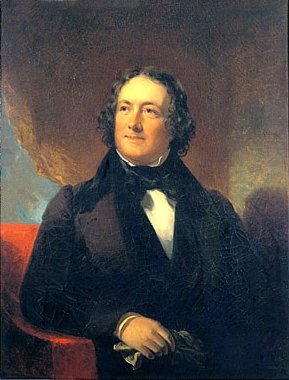
Nicholas Biddle (January 8, 1786 – February 27, 1844) was an American financier, often considered one of the most influential figures in the early economic history of the United States. He is primarily known for his impactful tenure as the third and final president of the Second Bank of the United States, an institution chartered from 1816 to 1836 that functioned as the nation's de facto central bank. Biddle's career was remarkably diverse, encompassing roles as an editor, diplomat, author, and politician, including service in both houses of the Pennsylvania state legislature. However, his lasting historical prominence stems from his central role as the chief adversary of President Andrew Jackson in the monumental political and economic struggle known as the Bank War.
Early Life and Diverse Contributions
Born into the highly distinguished and influential Biddle family of Philadelphia, Nicholas Biddle displayed intellectual prowess from a young age, graduating from Princeton (then the College of New Jersey) at just 13 years old. His early career saw him gain invaluable experience working with prominent American statesmen. He served as a private secretary to John Armstrong Jr., the U.S. Minister to France, and later as secretary to James Monroe, the U.S. Minister to Great Britain (and future President). These diplomatic postings provided him with a sophisticated understanding of international finance and statecraft. Upon his return, Biddle contributed significantly to American letters by editing the official journals of the Lewis and Clark expedition. As a politician in the Pennsylvania state legislature, he became an early and vocal defender of the necessity and utility of a national bank, frequently articulating counter-arguments to the prevailing Jeffersonian criticisms which often raised concerns about the constitutionality of such an institution and its potential for centralized power.
Presidency of the Second Bank of the United States
From 1823 until 1836, Nicholas Biddle served as president of the Second Bank of the United States. During his leadership, the Bank played a crucial role in the young nation's economy. It acted as the fiscal agent for the U.S. Treasury, managed federal deposits, and, most significantly, exerted considerable control over the nation's money supply and interest rates by regulating the credit issued by state banks. Biddle, a firm believer in sound money and responsible financial management, meticulously used the Bank's powers to expand or contract credit, aiming to prevent the recurring economic crises, speculative bubbles, and periods of inflation or deflation that plagued the nascent American economy. His objective was to provide a stable and uniform national currency, foster economic growth, and maintain financial stability.
The Bank War: A Clash of Ideologies
Biddle's highly effective management of the Second Bank positioned it at the center of the nation's financial system, but also made it a target of political contention. This culminated in the "Bank War," a defining struggle of the Jacksonian era.
The Catalyst: The Recharter Bill of 1832
With encouragement from influential political allies, most notably Senator Henry Clay, a leading advocate for his "American System" which included a strong national bank, Biddle sought to renew the Bank's federal charter four years ahead of its expiration in 1836. This move, made in 1832, was intended to secure the Bank's future and, for Clay and his supporters, to potentially make the Bank a key issue in the upcoming presidential election. The recharter bill successfully passed both the House of Representatives and the Senate, signaling a legislative endorsement of the Bank's continued operation.
President Jackson's Veto and Its Aftermath
Despite the bill's passage through Congress, it was met with an emphatic veto from President Andrew Jackson. Jackson harbored a deep-seated hostility towards the Bank, viewing it as an unconstitutional monopoly that concentrated too much economic and political power in the hands of a privileged few, often foreign investors, at the expense of the common people and states' rights. His veto message was a powerful declaration against centralized financial power, framing the Bank as a threat to American democracy. This presidential action ignited the full fury of the Bank War, transforming a financial debate into a profound political and ideological battle over the role of government, economic power, and the interpretation of the Constitution.
Escalation: The Removal of Deposits and Biddle's Countermove
Jackson escalated the conflict further in 1833 by ordering the Secretary of the Treasury to remove all federal government deposits from the Second Bank and redistribute them among various state banks, derisively termed "pet banks" by critics. This move severely weakened the Second Bank's financial standing and its ability to regulate the national economy effectively. In response, Biddle made the controversial decision to restrict credit and raise interest rates, a move that he argued was necessary to protect the Bank's reserves and demonstrate its indispensable role in providing national credit. This contraction of the money supply led to a mild economic recession in 1833-1834, sometimes referred to as "Biddle's Panic" or "Biddle's Recession," further intensifying public debate and drawing criticism to Biddle's tactics.
The End of the Second Bank and Biddle's Legacy
The Second Bank of the United States' federal charter ultimately expired in 1836, marking a significant victory for Jackson and his supporters in the Bank War. Biddle, however, managed to secure a new charter from the state of Pennsylvania, allowing the institution to continue operating as the "Bank of the United States of Pennsylvania." Despite this, stripped of its federal backing, its national regulatory powers, and grappling with the broader economic instability that would soon lead to the Panic of 1837, the state-chartered bank struggled. It eventually collapsed in 1841, a critical moment that effectively ended the experiment with a national central bank in the United States until the creation of the Federal Reserve System in 1913.
Nicholas Biddle's legacy remains a subject of historical debate. He is largely remembered as a brilliant, if sometimes rigid, financier who brought a degree of stability and order to the chaotic financial landscape of early America. His sophisticated understanding of monetary policy was arguably ahead of its time. However, his strong-willed confrontation with President Jackson, while rooted in a belief in the necessity of a national bank, ultimately contributed to the demise of the institution he led. The Bank War had profound and lasting consequences, shaping American financial policy, increasing the power of state banks, and reinforcing a deep-seated American skepticism of centralized financial authority for generations.
Frequently Asked Questions About Nicholas Biddle and the Bank War
- Who was Nicholas Biddle?
- Nicholas Biddle (1786-1844) was a prominent American financier, diplomat, author, and politician, best known as the third and final president of the Second Bank of the United States and a central figure in the "Bank War" against President Andrew Jackson.
- What was the Second Bank of the United States?
- The Second Bank of the United States, chartered from 1816 to 1836, served as the nation's de facto central bank. It managed federal finances, regulated state banks, and aimed to stabilize the national currency and economy.
- What was Nicholas Biddle's role at the Second Bank?
- As president from 1823 to 1836, Biddle effectively controlled the nation's money supply and interest rates, striving to prevent economic crises and promote a sound, uniform national currency.
- What was the "Bank War"?
- The Bank War was a major political and economic conflict during Andrew Jackson's presidency (1829-1837) concerning the fate of the Second Bank of the United States. Jackson viewed the Bank as unconstitutional and a dangerous monopoly, while Biddle and his allies argued for its necessity for national economic stability.
- Why did Andrew Jackson oppose the Second Bank?
- Jackson believed the Bank was unconstitutional, a corrupt monopoly that concentrated wealth and power in the hands of a few elites, and that it served foreign interests rather than the American people. He saw it as a threat to states' rights and democratic principles.
- How did the Bank War end?
- The Bank War effectively ended with President Jackson's veto of the Bank's recharter bill in 1832 and his subsequent decision to remove federal deposits from the Bank in 1833. The Second Bank's federal charter expired in 1836, and it eventually collapsed as a state-chartered institution in 1841, marking the end of national central banking until the Federal Reserve's creation in 1913.