English
  español
  français
  português
  русский
  العربية
  简体中文
简体中文 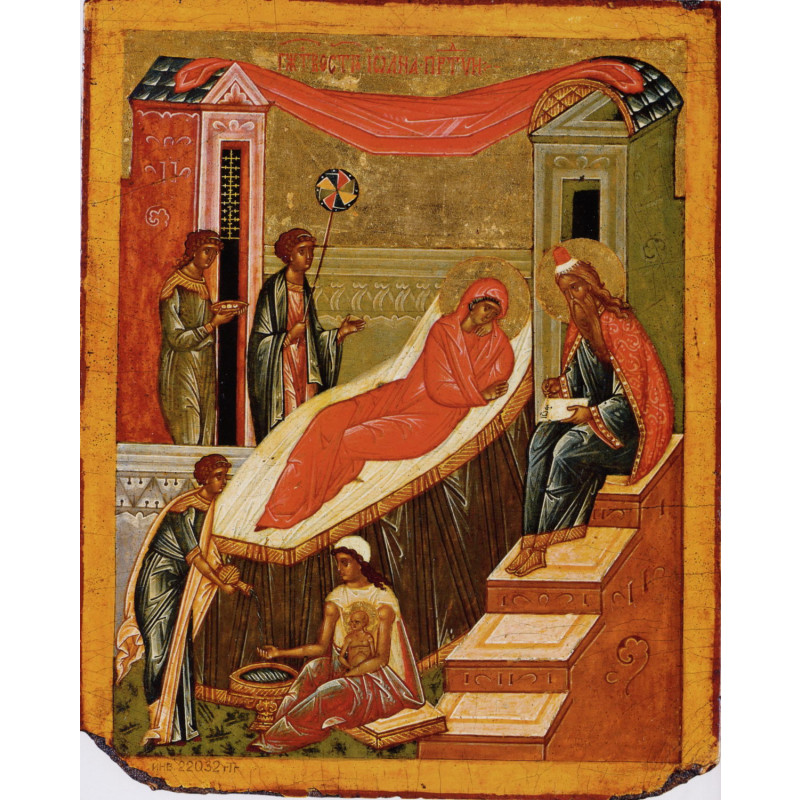
The Feast of Saint John the Baptist, often simply known as St. John's Day or Midsummer in many cultures, holds a singular distinction within the Christian liturgical calendar. Unlike the vast majority of saints, whose remembrance typically aligns with their passing into eternal life—a day often considered their 'heavenly birthday'—the Feast of Saint John the Baptist stands as one of only two pivotal celebrations commemorating the actual earthly birthdate of a saint. The second, equally significant observance is the Nativity of the Blessed Virgin Mary, celebrated on September 8th. This unique focus on John's birth underscores his extraordinary role as the 'forerunner' of Christ, prophesied even before his arrival.
The traditional date for the birth of Saint John the Baptist, June 24th, is deeply rooted in biblical interpretation and early Christian calculation. Based on the Gospel of Luke, which suggests John was conceived six months prior to Jesus (Luke 1:36) and born six months before Him (Luke 1:26), this date was precisely set six months before the traditional celebration of Christmas on December 25th. This annual commemoration has been a cornerstone of Christian observance for centuries, recognized by Roman Catholic, Orthodox, and various Protestant denominations. Beyond his birth, both Roman Catholic and Orthodox churches also solemnly commemorate the martyrdom of St. John the Baptist, often observed on August 29th, marking the tragic day of his beheading.
Connecting with Ancient Traditions: The Summer Solstice
Historically, the placement of the Feast of Saint John the Baptist on June 24th was no mere coincidence. It shrewdly aligns with, and in many respects, superseded ancient pagan holidays that enthusiastically celebrated the summer solstice. This astronomical event, marking the longest day and shortest night of the year, typically falls around June 20th or 21st in the Northern Hemisphere. Pre-Christian European cultures revered this period with elaborate rituals, often involving bonfires, fertility rites, and expressions of gratitude for the sun's life-giving power and the promise of abundant harvests. The Christian Church, in its strategic expansion, often adapted existing pagan festivals by infusing them with new, sacred meaning, thereby Christianizing popular customs rather than attempting to abolish them outright. This particular alignment also carries rich theological symbolism: John the Baptist himself declared, "He [Christ] must increase, but I must decrease" (John 3:30), reflecting the decreasing light after the solstice as the days shorten, and contrasting it with the increasing light of Christ at Christmas, when the days begin to lengthen.
Modern Celebrations and Enduring Spirit
While the outright observation of "St. John's Day" as a public holiday may have lessened in some parts of Europe, its spirit and traditions remain remarkably vibrant and widely observed as a religious and cultural feast in numerous countries. The enduring popularity is especially palpable in the Nordic nations, where the celebration often takes on a unique, almost mystical quality, blending ancient customs with Christian reverence. For instance:
- Sweden: Known as Midsommar, this is arguably the most beloved holiday after Christmas, characterized by decorating and dancing around a maypole (Midsommarstång), wearing flower wreaths, singing traditional songs, and enjoying elaborate outdoor feasts.
- Denmark and Norway: Celebrated as Sankthansaften (Saint Hans's Eve), large bonfires are lit on beaches and in parks, often accompanied by communal singing and revelry.
- Finland: Juhannus, or Midsummer, is a time for retreating to lakeside cottages, lighting massive bonfires (kokko), and enjoying sauna rituals.
- Spain and Portugal: Celebrations, particularly the "Fogueres de Sant Joan" (Bonfires of Saint John) in Alicante, Spain, or "Festa de São João" in Porto, Portugal, feature elaborate bonfires, fireworks, street parties, and traditional dances.
- France and Canada (Quebec): La Fête de la Saint-Jean-Baptiste is celebrated with parades, bonfires, and gatherings, particularly prominent in Quebec as a cultural and national holiday.
These festivities, whether marked by solemn church services or joyful outdoor gatherings, underscore the profound and lasting impact of Saint John the Baptist, not only as a pivotal figure in Christian theology but also as a catalyst for widespread cultural traditions that continue to bring communities together.
Frequently Asked Questions About Saint John's Day
- Why is Saint John the Baptist's birthday celebrated instead of his death day?
- Unlike most saints who are venerated on the day of their death (seen as their 'heavenly birth'), Saint John the Baptist's birth is celebrated because of his unique prophetic role as the forerunner of Jesus, sanctified in his mother's womb, as recounted in the Gospel of Luke. This singular honor is shared only with the Blessed Virgin Mary.
- How is the date of June 24th determined for St. John's Feast?
- The date is traditionally set six months before Christmas (December 25th), based on biblical accounts that suggest John the Baptist was conceived and born approximately six months before Jesus. This timing also strategically coincided with and Christianized existing pagan summer solstice festivals.
- What is the significance of the summer solstice connection to St. John's Day?
- The Feast of Saint John the Baptist falls near the summer solstice, the longest day of the year. This connection reflects John's own words, "He [Christ] must increase, but I must decrease," symbolizing John's role in preparing the way for Christ, whose birth (Christmas) occurs as the days begin to lengthen after the winter solstice.