English
  español
  français
  português
  русский
  العربية
  简体中文
简体中文 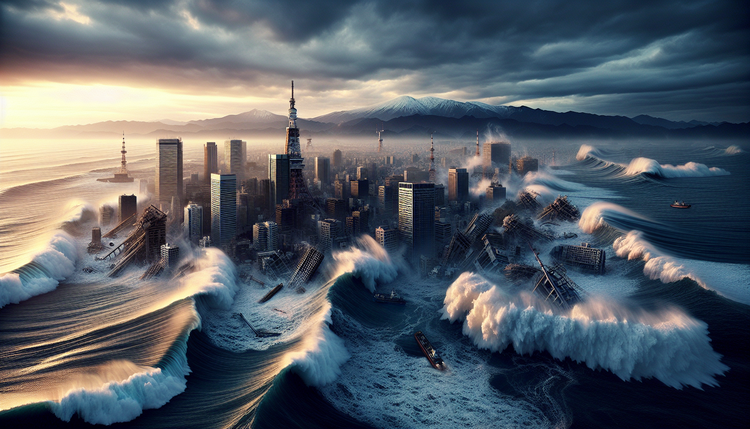
The 2011 Tōhoku earthquake and tsunami, often called the Great East Japan Earthquake or simply 3.11, was a magnitude 9.0–9.1 megathrust event that struck off the coast of northeastern Honshu at 14:46 JST on March 11, 2011. It triggered towering tsunami waves that inundated low-lying coastal plains, destroyed towns, and caused nearly 20,000 deaths and thousands more missing. The tsunami also precipitated the Fukushima Daiichi nuclear accident, one of only two nuclear emergencies rated at the maximum Level 7 on the International Nuclear and Radiological Event Scale (INES).
Beyond the human toll, the disaster reshaped energy policy, disaster preparedness, and coastal engineering in Japan and around the world, and remains the costliest natural disaster on record.
What was the 2011 Tōhoku earthquake and tsunami?
On March 11, 2011, a powerful undersea earthquake struck roughly 72 km (45 mi) east of the Oshika Peninsula, off the Tōhoku region of Japan. The quake, which lasted about six minutes, was the most powerful ever recorded in Japan and the fourth-strongest globally since 1900. It occurred along the subduction zone where the Pacific Plate dives beneath the Okhotsk (a microplate associated with the North American/Eurasian boundary) beneath northeastern Honshu.
The shaking triggered a massive tsunami that raced ashore minutes later. In places such as Miyako (Iwate Prefecture), maximum run-up heights reached up to 40.5 m (133 ft). Around Sendai, waves sped across the shallow coastal shelf and floodplain, traveling up to 10 km (6 mi) inland and moving as fast as 700 km/h (435 mph) in deep water before slowing and rising near shore.
Timeline: From quake to cascading crises
- 14:46 JST: A magnitude 9.0–9.1 megathrust earthquake ruptures the seafloor off Tōhoku, with strong shaking felt from Hokkaido to Kanto.
- Minutes later: The Japan Meteorological Agency (JMA) issues major tsunami warnings. Residents in coastal Sendai have about 8–10 minutes before the first waves arrive, overwhelming sea defenses and sweeping away more than a hundred designated evacuation sites.
- Afternoon–Evening: The tsunami engulfs large sections of Iwate, Miyagi, and Fukushima Prefectures. Sendai Airport, ports, highways, and rail lines are flooded or destroyed.
- At Fukushima Daiichi: Tsunami waves overtop the plant’s seawall and flood critical backup power systems. Loss of power halts cooling; within hours to days, overheating damages fuel in Units 1–3, leading to core meltdowns and hydrogen explosions that blow out upper sections of several reactor buildings.
- Following weeks: Massive search-and-rescue efforts unfold amid snowfall and freezing temperatures, particularly around Ishinomaki and Kesennuma. Thousands of aftershocks (dozens surpassing magnitude 6) rattle the region as evacuations continue.
Geology: Why it happened
The Tōhoku earthquake was a classic megathrust event along a convergent boundary. The Pacific Plate, moving west-northwest, is subducting beneath northeastern Japan at roughly 8–9 cm per year. Over centuries, stress accumulated and the fault locked; on 3.11 it ruptured suddenly along a fault plane hundreds of kilometers long and tens of kilometers deep.
This rapid displacement lifted and lowered sections of the seafloor by several meters, displacing vast volumes of water and generating the tsunami. The extremely large slip near the trench (in some places exceeding 40–50 m) amplified the tsunami’s height, especially for coastlines facing perpendicular to the rupture.
Tsunami behavior and impacts
Unlike storm surges, which build slowly with atmospheric pressure and wind, tsunamis are entire columns of water set in motion by sudden seafloor movement. They travel swiftly across deep ocean basins—approaching jetliner speeds—then slow and grow taller in shallow coastal waters.
- Heights: Maximum run-up of approximately 40.5 m in Miyako; many locations recorded 10–20 m waves.
- Inundation: In the Sendai plain, water reached up to 10 km inland, overtopping seawalls and floodgates.
- Speed and arrival: In deep water, wave speeds approached 700 km/h; arrivals along the Sanriku and Sendai coasts came within minutes of the quake, leaving little time to evacuate.
- Pacific-wide effects: The tsunami crossed the Pacific, causing damage in Hawaii and along the U.S. West Coast, notably in Crescent City and Santa Cruz harbors.
Compounding the danger, snow and near-freezing temperatures set in as waves receded. In Ishinomaki—the city with the highest death toll—temperatures hovered around 0°C (32°F), complicating rescue and survival.
Human toll and emergency response
By official counts released in 2021, 19,747 people died, 2,556 remained missing, and 6,242 were injured. The disaster displaced hundreds of thousands at its peak, with evacuee numbers swelling above 470,000 across affected prefectures in the immediate aftermath.
Search-and-rescue operations involved Japan’s Self-Defense Forces, police, fire brigades, medical teams, community volunteers, and international partners. Helicopters hoisted survivors from rooftops; ships delivered supplies to isolated peninsulas; and temporary shelters sprung up in schools and civic centers. Many communities, however, lost shelters to inundation, and fuel shortages impeded logistics in the first critical days.
The Fukushima Daiichi nuclear accident
The tsunami crippled the Fukushima Daiichi Nuclear Power Plant. Floodwaters disabled diesel generators and electrical switchgear, causing a station blackout that halted active cooling in Units 1–3, which were in operation at the time of the quake. As decay heat continued to build, water boiled off and fuel damage progressed to core meltdowns.
Hydrogen, produced by high-temperature reactions between zirconium cladding and steam, accumulated in the upper levels of several reactor buildings. Without reliable venting and power, hydrogen explosions damaged the superstructures of Units 1 and 3, and a subsequent explosion impacted Unit 4’s building. Large controlled and uncontrolled releases of radioactive material occurred, particularly in the early days of the crisis.
- Evacuations: Authorities ordered residents within 20 km (12 mi) of Fukushima Daiichi to evacuate. Around Fukushima Daini, 10 km (6.2 mi) evacuation zones were implemented. Shelter-in-place advisories extended out to 30 km for a time. In total, over 150,000 people evacuated due to nuclear concerns alone in the early period.
- INES rating: The event was rated Level 7, the highest on the International Nuclear and Radiological Event Scale—matched only by the 1986 Chernobyl disaster.
- Stabilization and cleanup: Over months, workers installed makeshift power and cooling systems, achieved cold shutdown conditions, and began the long process of decommissioning, water management, and decontamination. Decommissioning is expected to span decades.
Economic and infrastructural damage
The earthquake and tsunami devastated infrastructure across northeastern Japan:
- Transportation: Entire sections of highways and local roads buckled or washed away; rail lines and stations, including the Tōhoku Shinkansen corridor, suffered damage. Services were suspended for weeks, though rapid inspections and repairs allowed gradual restoration with no passenger fatalities aboard Shinkansen trains.
- Ports and airports: Sendai Airport was inundated; harbors from Hachinohe to Ibaraki were wrecked, with hundreds of fishing vessels destroyed or beached inland.
- Energy and industry: Petrochemical fires broke out, including a major blaze at the Cosmo Oil Chiba refinery. Power shortages led to rolling blackouts across the Kanto region as generation capacity fell.
Early estimates placed insured losses from the earthquake alone at US$14.5–34.6 billion. On March 14, 2011, the Bank of Japan injected ¥15 trillion (about US$183 billion) into financial markets to stabilize liquidity. The World Bank later estimated total economic costs at around US$235 billion, marking it as the costliest natural disaster in history. A 2020 study attributed a 0.47 percentage point decline in Japan’s real GDP growth in the year following the disaster to the quake and its aftermath.
Aftershocks and seismic sequence
The mainshock was followed by an extraordinary aftershock sequence: thousands of events over months, with numerous quakes stronger than magnitude 6 and several exceeding magnitude 7. These aftershocks complicated recovery, triggered additional localized tsunamis and landslides, and kept communities on edge as assessments and rebuilding continued.
Policy shifts, global ripple effects, and public health
3.11 reshaped policy and perceptions worldwide:
- Nuclear policy: Japan temporarily shut down its nuclear fleet for safety inspections and upgrades, later reactivating a limited number of reactors under stricter standards. Several countries reassessed nuclear plans; Germany, for example, accelerated its nuclear phaseout.
- Disaster risk reduction (DRR): Japan invested in higher and smarter seawalls, elevated evacuation routes, vertical evacuation towers, and community drills. Hazard maps were revised with updated inundation scenarios and multilingual alerts.
- Public health: The disaster caused immediate trauma and long-term mental health impacts. Extended displacement, especially among the elderly, increased risks of isolation, chronic disease complications, and stress-related conditions. Radiation exposures among the public were generally kept below emergency thresholds due to evacuations and food monitoring, though long-term monitoring and decontamination continued for years.
Recovery and reconstruction
Reconstruction unfolded in phases: emergency response, debris removal, infrastructure restoration, housing, and economic revitalization. Coastal towns redesigned neighborhoods on higher ground, created buffer greenbelts, and relocated critical facilities away from tsunami-prone areas. By mid-decade, expressways and Shinkansen extensions reopened, fisheries resumed in many ports, and new tsunami-resilient schools and hospitals stood as symbols of renewal.
Even so, the demographic and economic challenges were stark. Some communities experienced permanent population decline, reflecting both preexisting rural aging trends and post-disaster relocations. Cultural preservation—reviving festivals, craft traditions, and community spaces—became part of holistic recovery, recognizing that resilience is social as well as structural.
Lessons learned: How to prepare for future tsunamis
- Heed natural warnings: If you feel a long or strong quake near the coast, evacuate to high ground immediately—do not wait for official alerts.
- Know multiple routes: Identify at least two evacuation routes and the nearest vertical evacuation options (tall, engineered buildings or towers).
- Pack a go-bag: Keep water, food, medications, flashlight, radio, and copies of vital documents ready.
- Practice drills: Community-wide drills reduce hesitation and confusion during real events.
- Respect hazard maps: Live and rebuild outside mapped inundation zones whenever possible; elevate structures where avoidance is not feasible.
- Redundancy matters: For critical facilities, diversify power supplies, protect backup systems from flooding, and ensure passive safety features where possible.
Why this disaster still matters
The 2011 Tōhoku earthquake and tsunami demonstrated how cascading risks—earthquake, tsunami, and nuclear failure—can escalate into a national emergency. It drove advances in early warning, coastal engineering, nuclear safety, and community preparedness. The memory of 3.11 continues to inform science, policy, and public awareness, ensuring that the lessons learned help reduce losses when future earthquakes strike.
Key facts at a glance
- Date and time: March 11, 2011, 14:46 JST (05:46 UTC)
- Magnitude: 9.0–9.1 (Mw)
- Epicenter: ~72 km east of the Oshika Peninsula, off the Tōhoku coast
- Tsunami heights: Up to 40.5 m (Miyako); inland reach up to 10 km near Sendai
- Casualties (2021 figures): 19,747 deaths; 2,556 missing; 6,242 injured
- Nuclear accident: Fukushima Daiichi, INES Level 7; evacuations within 20 km (Daiichi) and 10 km (Daini)
- Economic impact: ~US$235 billion total cost (World Bank)
FAQ
What caused the 2011 Tōhoku earthquake and tsunami?
A sudden rupture along the subduction boundary where the Pacific Plate dives beneath northeastern Japan released massive energy and displaced the seafloor. This vertical seafloor movement pushed up the overlying ocean, generating the tsunami that devastated the Tōhoku coast.
How high were the tsunami waves?
Run-up heights varied by location and coastal geometry. The maximum documented run-up reached about 40.5 meters (133 ft) in Miyako, Iwate Prefecture. Many communities experienced waves 10–20 meters high, with water flooding up to 10 km inland on the Sendai plain.
How many people were affected?
By 2021, official figures recorded 19,747 deaths, 2,556 missing, and 6,242 injured. Hundreds of thousands were displaced in the weeks after the disaster, and more than 150,000 people evacuated due to the Fukushima nuclear crisis in the early stages.
Why did the Fukushima Daiichi accident happen?
The tsunami flooded critical backup power systems, causing a station blackout that disabled cooling for operating reactors. Overheating led to core damage in Units 1–3, hydrogen generation, and explosions in the upper levels of several reactor buildings. The event was rated INES Level 7 due to the scale of radioactive releases.
How long did the shaking last, and were there aftershocks?
The mainshock lasted roughly six minutes. Thousands of aftershocks followed over months, including many above magnitude 6 and several above magnitude 7, complicating rescue and recovery.
What was the economic impact?
The World Bank estimated total economic costs at around US$235 billion, the highest for any natural disaster. The Bank of Japan injected ¥15 trillion (about US$183 billion) to stabilize markets, and a 2020 study linked the disaster to a 0.47 percentage point decline in Japan’s real GDP growth the following year.
What changed in Japan after 3.11?
Japan upgraded tsunami defenses, evacuation planning, and hazard mapping; reinforced critical infrastructure; and overhauled nuclear safety regulations. Many coastal communities rebuilt on higher ground or redesigned urban layouts to reduce future tsunami risk.