
 English
  español
  français
  português
  русский
  العربية
  简体中文
简体中文 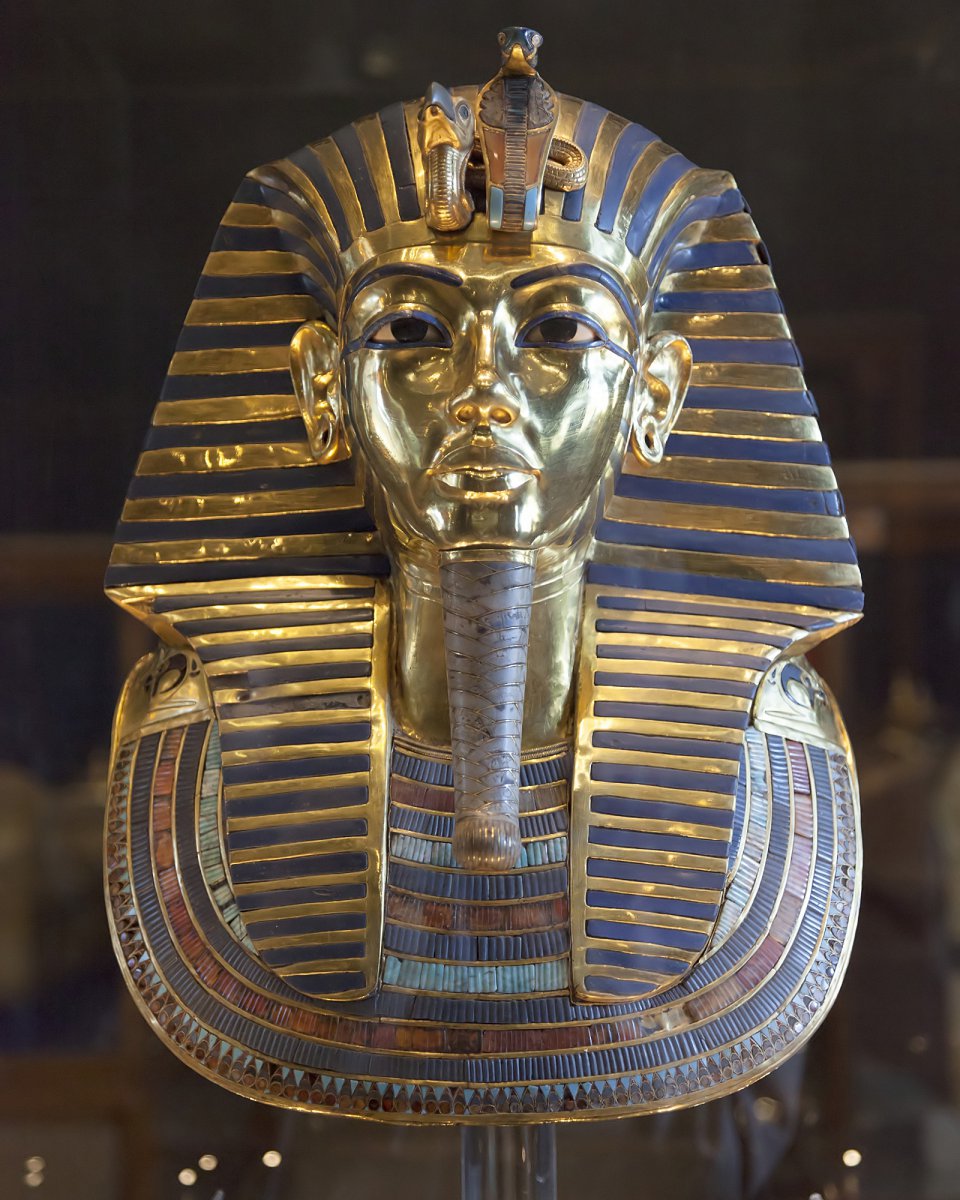
The discovery of Pharaoh Tutankhamun's tomb in 1922 captivated the world, revealing an unparalleled glimpse into ancient Egyptian royalty. This monumental find, led by British archaeologist Howard Carter, not only cemented Tutankhamun's place in history but also sparked a global resurgence of interest in Egyptology.
Howard Carter: The Discovery of a Lifetime
Howard Carter (May 9, 1874 – March 2, 1939) was a dedicated British archaeologist and Egyptologist whose name became synonymous with one of the most astonishing finds in archaeological history. After years of meticulous, often frustrating, searching in Egypt's fabled Valley of the Kings, Carter, supported by his patron Lord Carnarvon, made an extraordinary breakthrough in November 1922. He unearthed the virtually intact tomb of the 18th Dynasty Pharaoh Tutankhamun, a discovery that would soon be celebrated as the best-preserved pharaonic tomb ever found within this sacred burial ground.
The significance of an "intact" tomb cannot be overstated. Most ancient Egyptian burial sites had been plundered over millennia, leaving archaeologists with fragments rather than full narratives. Tutankhamun's tomb, however, offered a breathtaking panorama of royal funerary practices, complete with thousands of exquisite artifacts, perfectly preserved for over three millennia. This allowed for an unprecedented understanding of ancient Egyptian art, religion, and daily life.
Tutankhamun: The Boy King and His Royal Lineage
Identity and Family Ties
Tutankhamun, often colloquially known as "King Tut," was a pivotal Egyptian pharaoh who ruled during the latter part of the illustrious 18th Dynasty, a period widely considered the zenith of the New Kingdom (c. 1550–1070 BC). His reign, estimated from approximately 1332 to 1323 BC according to conventional chronology, marked a crucial transitional phase in ancient Egyptian history.
- Father: His father is widely believed to be the controversial pharaoh Akhenaten, the "heretic king" who initiated a monotheistic revolution centered on the Aten sun disk. This identification was solidified by DNA testing linking Tutankhamun to the mummy found in tomb KV55 in the Valley of the Kings.
- Mother: Remarkably, his mother was Akhenaten's sister, meaning Tutankhamun was the product of a sibling marriage – a practice not uncommon among Egyptian royalty to preserve bloodlines. She has been identified through advanced DNA analysis as an unknown mummy, affectionately dubbed "The Younger Lady," discovered in tomb KV35, alongside other royal mummies.
Tutankhamun ascended the throne at a tender age of eight or nine, a period of immense political and religious upheaval. He ruled under the significant influence of his powerful vizier, Ay, who would eventually succeed him as pharaoh. Tutankhamun further solidified his royal connections by marrying his paternal half-sister, Ankhesenamun, who was a daughter of Akhenaten and likely the famous Queen Nefertiti. Tragically, their union was marked by sorrow, as evidenced by two mummified fetuses found in Tutankhamun's tomb – representing two daughters lost, one at an estimated 5-6 months of pregnancy and the other shortly after a full-term birth.
The Significance of His Names: From Aten to Amun
Initially known as Tutankhaten, meaning "Living image of Aten," his name reflected his father Akhenaten's revolutionary devotion to the sun disk, Aten. However, following Akhenaten's death and the subsequent religious restoration, the young pharaoh changed his name to Tutankhamun, meaning "Living image of Amun." This profound change signaled a deliberate return to the traditional polytheistic religion, with Amun, the chief deity of Thebes, reinstated as the preeminent god of Egypt.
While these translations are widely accepted, a small number of Egyptologists offer alternative interpretations. Scholars like Battiscombe Gunn suggested "The-life-of-Aten-is-pleasing," while Professor Gerhard Fecht proposed "One-perfect-of-life-is-Aten." These variations highlight the complexities and nuances inherent in translating ancient Egyptian hieroglyphs and understanding the subtle religious and political messages embedded within royal names.
Religious and Political Restoration
Tutankhamun's reign was characterized by a concerted effort to reverse the radical religious reforms of his father. He meticulously worked to restore the ancient Egyptian religion after its effective dissolution during the Amarna period, Akhenaten's era of Aten worship. This involved:
- Re-establishing and generously endowing the powerful priestly orders of traditional cults, especially that of Amun, which had been suppressed.
- Initiating widespread restoration of temples and monuments that had been damaged, neglected, or repurposed during the Atenist revolution.
- Returning the capital from Akhetaten (modern-day Amarna), Akhenaten's specially built city, back to the traditional religious and political heartland of Thebes.
- Overseeing the reburial of his father, Akhenaten, in the Valley of the Kings, symbolically bringing his contentious reign back into the fold of traditional royal burial practices.
These actions were crucial for stabilizing the country and healing the social and religious divisions caused by the Amarna period, marking Tutankhamun as a restorer pharaoh despite his youth.
Health and Physical Challenges
Modern scientific analysis of Tutankhamun's mummy has revealed a detailed picture of his health, suggesting he faced numerous physical challenges throughout his short life. He suffered from a significant deformity of his left foot, likely a clubfoot, combined with bone necrosis (death of bone tissue) in the same foot. These debilitating conditions would have made walking extremely painful and difficult, necessitating the use of a cane – over 130 walking sticks were found among the treasures in his tomb, emphasizing his reliance on them.
Further studies indicate he also contended with scoliosis, a curvature of the spine, and had contracted several strains of malaria, a disease that may have contributed to his premature death around the age of 19. These findings paint a poignant image of a young king burdened by illness and disability, far removed from the idealized representations often depicted in ancient Egyptian art.
The Global Impact of Tutankhamun's Discovery
Worldwide Fascination and the "Curse"
The 1922 discovery of Tutankhamun's tomb by Howard Carter, under the patronage of Lord Carnarvon, immediately seized global attention. The sheer volume and pristine condition of over 5,000 artifacts – ranging from gilded shrines and golden coffins to everyday objects like chariots and clothing – fueled an unprecedented public fascination with ancient Egypt. The iconic golden death mask of Tutankhamun, now a centerpiece of the Egyptian Museum in Cairo, quickly became a universal symbol of the pharaoh's mystique and the grandeur of his civilization.
The ensuing media frenzy also gave rise to the sensationalized myth of the "curse of the pharaohs." Following the untimely deaths of a few individuals associated with the tomb's opening, including Lord Carnarvon himself, popular culture quickly attributed these events to a supernatural curse protecting the pharaoh's resting place. While firmly debunked by scientists and historians, this myth continues to add to the enigmatic allure surrounding "King Tut."
Exhibitions and Enduring Legacy
Tutankhamun's treasures have embarked on multiple immensely popular international tours, transforming them into cultural ambassadors for ancient Egypt and attracting millions of visitors worldwide. These exhibitions not only generate significant revenue for Egypt's antiquities efforts but also serve to educate and inspire global audiences about this extraordinary civilization.
- Early Tours: International exhibitions began in 1962, with a seminal display at the Louvre in Paris, followed by the Kyoto Municipal Museum of Art in Tokyo, Japan. These early tours set attendance records.
- 1970s Blockbuster: A major exhibition from 1972 to 1979 captivated audiences across the United States, the Soviet Union, Japan, France, Canada, and West Germany, solidifying Tutankhamun's status as a global icon.
- Later Exhibitions: After a long hiatus, international tours resumed from 2005 to 2011. Notably, this exhibit broadened its scope to include artifacts from Tutankhamun's 18th Dynasty predecessors, such as Hatshepsut and Akhenaten, though it notably excluded the priceless golden death mask, which rarely leaves Egypt.
- Current and Future Display: The "Treasures of the Golden Pharaoh" tour, which commenced in Los Angeles in 2019, is slated to conclude in 2022. Its final destination is the magnificent new Grand Egyptian Museum (GEM) in Cairo. For the first time ever, the GEM is poised to display the complete Tutankhamun collection, meticulously gathered from various Egyptian museums and storerooms, offering an unparalleled and comprehensive view of the boy king's tomb and its contents.
Frequently Asked Questions About Tutankhamun and His Discovery
- Who discovered Tutankhamun's tomb?
- The intact tomb of Pharaoh Tutankhamun was discovered by British archaeologist Howard Carter in November 1922. His expedition was funded by Lord Carnarvon.
- When was Tutankhamun's tomb discovered?
- The discovery occurred in November 1922, marking a pivotal moment in the history of Egyptology.
- What was Tutankhamun's original name?
- Tutankhamun's birth name was Tutankhaten, meaning "Living image of Aten." He changed it to Tutankhamun, "Living image of Amun," after his father Akhenaten's death to signify a return to traditional polytheistic religion.
- Who was Tutankhamun's father?
- DNA testing has indicated that Tutankhamun's father was the controversial pharaoh Akhenaten, known for his monotheistic religious reforms.
- What is the "curse of the pharaohs" associated with Tutankhamun?
- The "curse of the pharaohs" is a popular myth that arose after some individuals involved in the tomb's discovery, including Lord Carnarvon, died prematurely. It suggests supernatural retribution for disturbing a pharaoh's resting place, though it lacks scientific basis and is generally considered media sensationalism.
- Where is Tutankhamun's golden death mask located?
- Tutankhamun's iconic golden death mask is a permanent exhibit at the Egyptian Museum in Cairo. It is anticipated to be a central display at the new Grand Egyptian Museum (GEM) once the full collection is consolidated there.