
 English
  español
  français
  português
  русский
  العربية
  简体中文
简体中文 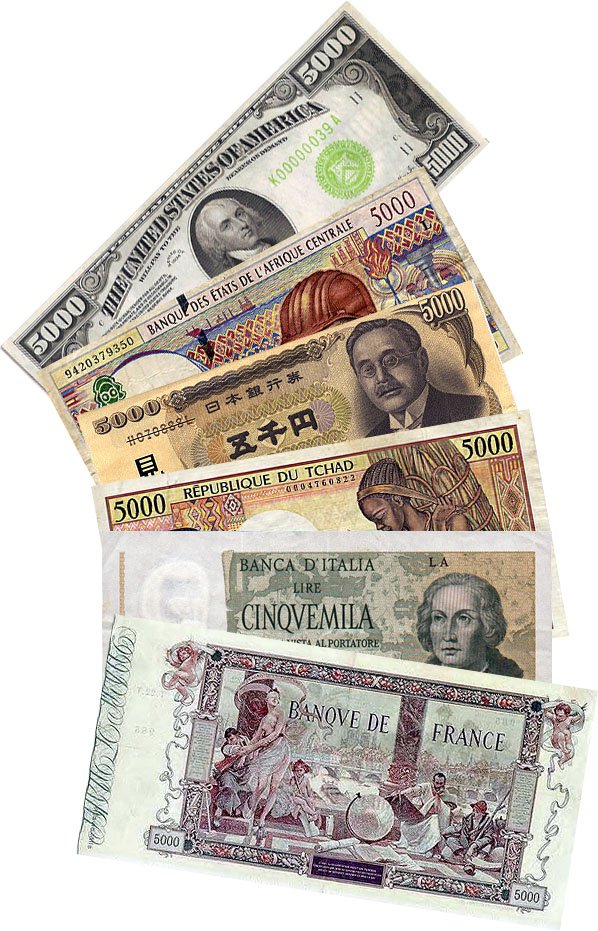
Exploring the Commonwealth of Massachusetts: A Legacy of Innovation and Influence
Officially known as the Commonwealth of Massachusetts, this distinctive U.S. state stands as the most populous within the vibrant New England region. Its geographical footprint is defined by its extensive border with the Atlantic Ocean and the Gulf of Maine to the east, offering a rich maritime heritage. To its south, Massachusetts shares borders with Connecticut (southwest) and Rhode Island (southeast), while New Hampshire lies to the northeast. Further west, Vermont borders to the northwest, and New York completes its western frontier, connecting it to broader American landscapes.
At the heart of Massachusetts lies Boston, its capital city, which also holds the distinction of being New England's most populous urban center. Boston is the core of the influential Greater Boston metropolitan area, a region that has profoundly shaped American history, academia, and industry. Its strategic coastal location and deep intellectual roots have fostered an environment of continuous progress.
Economic Transformation and Global Leadership
Massachusetts's economy has undergone remarkable transformations throughout its history. Initially reliant on agriculture, fishing, and vital maritime trade routes, the state experienced a profound shift during the Industrial Revolution, evolving into a dominant manufacturing hub. By the 20th century, a new economic paradigm emerged as Massachusetts gracefully transitioned from its manufacturing base to a burgeoning services-oriented economy. Today, modern Massachusetts stands as a recognized global leader, particularly in high-growth sectors such as biotechnology, cutting-edge engineering, world-class higher education, sophisticated finance, and critical maritime trade.
A Deep Dive into Massachusetts's Historical Tapestry
The Commonwealth of Massachusetts holds a pivotal place in early English colonization of North America. The renowned Plymouth Colony was established in 1620 by the Pilgrims, who arrived aboard the historic Mayflower, seeking religious freedom and new opportunities. A decade later, in 1630, the Massachusetts Bay Colony was founded, taking its name from the indigenous Massachusett people, and quickly established significant settlements in Boston and Salem. This period laid the groundwork for many of America's foundational principles.
However, this early colonial period also witnessed moments of profound social tension. In 1692, the town of Salem and its surrounding areas became the infamous stage for one of America's most chilling episodes of mass hysteria: the Salem witch trials. This dark chapter, which led to the accusations and executions of many individuals based on spectral evidence, serves as a stark reminder of the dangers of unchecked fear and superstition.
Innovation and rebellion also defined early Massachusetts. In 1777, General Henry Knox, a pivotal figure in the American Revolutionary War, founded the Springfield Armory. This facility would later become a crucible of industrial advancement, catalyzing numerous important technological breakthroughs, including the pioneering concept of interchangeable parts – a fundamental innovation that revolutionized manufacturing worldwide. A few years later, in 1786, Shays' Rebellion, a populist revolt led by disaffected American Revolutionary War veterans protesting economic injustices, significantly influenced the discussions and outcomes of the United States Constitutional Convention, highlighting the fragility of the nascent republic and the need for a stronger central government.
The 18th century also saw Massachusetts at the forefront of spiritual revival. The Protestant First Great Awakening, a powerful religious movement that swept across Britain and the Thirteen Colonies, famously originated from the pulpit of the influential Northampton preacher Jonathan Edwards. This movement reshaped religious practices and fostered a spirit of evangelical fervor.
As the American Revolution approached, Boston earned its lasting moniker as the "Cradle of Liberty." The city was a hotbed of revolutionary agitation, witnessing pivotal events such as the Boston Massacre (1770) and the Boston Tea Party (1773), which fueled the growing desire for independence and ultimately led to the War for Independence.
Enduring Influence on American Society and Culture
Beyond its early colonial and revolutionary significance, the entire Commonwealth of Massachusetts has consistently exerted a powerful scientific, commercial, and cultural influence on the history of the United States. Before the American Civil War, Massachusetts was a vibrant center for the burgeoning abolitionist movement, advocating for the end of slavery; the temperance movement, promoting moderation or abstinence from alcohol; and the transcendentalist movement, a philosophical and literary movement championing individualism, intuition, and the inherent goodness of people and nature, notably including figures like Ralph Waldo Emerson and Henry David Thoreau.
Massachusetts also boasts significant contributions to sports. In the late 19th century, two globally popular sports were invented in its western cities: basketball, created by Dr. James Naismith in Springfield in 1891, and volleyball, invented by William G. Morgan in Holyoke in 1895. These innovations profoundly shaped athletic culture worldwide.
In a landmark civil rights decision, Massachusetts became the first U.S. state to legally recognize same-sex marriage in 2004, following the groundbreaking ruling by the Massachusetts Supreme Judicial Court in the case of Goodridge v. Department of Public Health. This legal precedent set a powerful example for the nation.
The state has also been home to numerous prominent American political dynasties, including the influential Adams family, which produced two U.S. presidents (John Adams and John Quincy Adams), and the iconic Kennedy family, renowned for its enduring legacy in national politics, including President John F. Kennedy.
A Hub of Innovation and Education
Massachusetts is internationally renowned for its unparalleled concentration of top-tier educational institutions. Harvard University, located in Cambridge, holds the distinction of being the oldest institution of higher learning in the United States, founded in 1636. It also commands the largest financial endowment of any university globally. Its prestigious Harvard Law School has historically educated a significant majority of Justices of the Supreme Court of the United States, underscoring its profound influence on American jurisprudence.
Just a short distance from Harvard, also in Cambridge, is Kendall Square. This vibrant area has been lauded as "the most innovative square mile on the planet," a testament to the extraordinarily high concentration of entrepreneurial start-ups, groundbreaking research, and a culture of innovation that has flourished there since 2010. Both Harvard and the Massachusetts Institute of Technology (MIT), another world-renowned institution also situated in Cambridge, are consistently ranked as either the most or among the most highly regarded academic institutions worldwide, serving as global beacons of research and intellectual inquiry.
Quality of Life and Educational Excellence
The commitment to education in Massachusetts is reflected in its populace. Residents of the state have been identified by the World Population Review as possessing the highest average IQ among all U.S. states, exceeding 104. Furthermore, the state's public-school students consistently achieve academic performance levels that place them among the top tier globally. While consistently ranked as one of the top states in the United States for citizens to live in, offering high quality of life, diverse opportunities, and robust public services, it is important to note that Massachusetts is also recognized as one of the most expensive states to reside in, reflecting its desirability and economic vitality.
Common Questions About Massachusetts
- What is the official name of Massachusetts?
The official name is the Commonwealth of Massachusetts.
- What are Massachusetts's primary economic sectors today?
Modern Massachusetts is a global leader in biotechnology, engineering, higher education, finance, and maritime trade.
- Why is Boston known as the "Cradle of Liberty"?
Boston earned this title due to its pivotal role as a center of agitation and key events, such as the Boston Massacre and Boston Tea Party, that ultimately led to the American Revolution.
- Which major sports were invented in Massachusetts?
Both basketball (Springfield) and volleyball (Holyoke) were invented in western Massachusetts cities in the late 19th century.
- What is Massachusetts's significance in U.S. higher education?
Massachusetts is home to Harvard University, the oldest institution of higher learning in the U.S. with the largest endowment, and MIT, both consistently ranked among the world's top academic institutions. The state is a global hub for research and innovation.
Understanding Banknotes: History, Function, and Evolution
A banknote, also commonly referred to as a "bill" (especially in North American English), "paper money," or simply a "note," constitutes a specific type of negotiable promissory note. This financial instrument is typically issued by a bank or another authorized licensing authority, and it carries the fundamental promise of being payable to the bearer on demand. Essentially, it represents a claim on the issuing entity for a specified value.
The Evolution of Paper Money: From Commercial to National Currencies
Historically, banknotes were initially issued by commercial banks. These early commercial banknotes carried a legal obligation for the issuing bank to redeem them for legal tender, which at the time usually meant a quantity of gold or silver coin, whenever presented to the chief cashier of the originating bank. Consequently, these commercial banknotes would primarily trade at their face value only within the specific market or region served by the bank that issued them, limiting their broader acceptance. Over time, this system was largely superseded as commercial banknotes were progressively replaced by national banknotes, predominantly issued by centralized institutions such as central banks or national monetary authorities.
National banknotes, in contrast to their commercial predecessors, are very often (though not universally) designated as "legal tender." This crucial designation means that courts of law are legally compelled to recognize them as a satisfactory and valid form of payment for monetary debts. The historical practice of banks ensuring they could always pay customers in valuable coins when banknotes were presented for redemption formed the basis for what became the backing of currencies. This concept of "backing" notes with a tangible, valuable substance – such as gold or silver – is fundamental to the history of central banking. However, in contemporary finance, the vast majority of national currencies are no longer backed by precious metals or other commodities. Their value today is primarily "fiat," meaning it is derived from a government decree or order (fiat) and the collective trust and confidence of the public in that government and its economic stability. Generally, coins are reserved for lower-valued monetary units in circulation, while banknotes are utilized for higher denominations, with exceptions for non-circulating high-value or commemorative precious metal issues.
Tracing the Roots of Financial Instruments and Banknotes
The concept of formalizing financial transactions with written agreements dates back millennia. For instance, Law 100 of the Code of Hammurabi, codified around 1755-1750 BC, stipulated precise terms for the repayment of a loan from a debtor to a creditor, including a schedule and a specified maturity date detailed in written contractual terms. Further, Law 122 mandated that a depositor of valuable goods like gold, silver, or other chattel/movable property for safekeeping must present all articles along with a signed contract of bailment to a notary before depositing them with a banker. Law 123 then stipulated that a banker was discharged of any liability from a contract of bailment if the notary denied the existence of the contract, emphasizing the importance of verified documentation. Law 124 ensured that a depositor with a notarized contract of bailment was entitled to redeem the full value of their deposit, and Law 125 held the banker liable for the replacement of deposits stolen while in their possession. While these laws describe sophisticated early banking and contract principles, they lay foundational concepts for trust and written agreements that would later underpin the development of promissory notes and, eventually, banknotes.
The earliest forms of lightweight promissory notes began to emerge in various ancient civilizations. In China, during the Han dynasty, discernible promissory notes, reportedly made of leather, appeared as early as 118 BC. Similarly, archaeological findings in London suggest that Rome may have employed a durable, lightweight substance for promissory notes around 57 AD. Intriguingly, Carthage is purported to have issued bank notes on parchment or leather even earlier, before 146 BC, which could potentially make it the oldest known user of such lightweight promissory notes.
The first true banknotes, as we understand them today, were ingeniously developed in China during the Tang and Song dynasties, with their origins tracing back to the 7th century. These early forms evolved from merchant receipts of deposit during the Tang dynasty (618-907 AD), known as "feiqian" or "flying money." Merchants and wholesalers initiated this practice to circumvent the cumbersome and heavy bulk of copper coinage required for large commercial transactions. The convenience and efficiency of paper currency proved transformative, leading to its widespread adoption by the vast Mongol Empire during the Yuan dynasty (1271-1368), further solidifying its role in large-scale commerce and governance.
In Europe, the concept of banknotes was first introduced during the 13th century through the accounts of renowned travelers like Marco Polo, who marvelled at their use in China. However, it took several more centuries for European banknotes to make their official appearance, with the first recorded instance being in Sweden in 1661, issued by the Stockholms Banco.
Combating Counterfeiting: A Continuous Challenge
Counterfeiting, defined as the unauthorized forgery of banknotes, represents an inherent and persistent challenge in the issuance of currency. To safeguard the integrity of financial systems and public trust, this threat is continuously countered by sophisticated anti-counterfeiting measures meticulously integrated into the printing process of banknotes. The ongoing battle against the forgery of banknotes and cheques has been a principal driving force behind the development and advancement of security printing methods over recent centuries, leading to the incorporation of features like watermarks, security threads, holograms, microprinting, and color-shifting inks to make replication exceedingly difficult.
Frequently Asked Questions About Banknotes
- What is the basic definition of a banknote?
A banknote is a type of negotiable promissory note, typically issued by a bank or licensed authority, payable to the bearer on demand, representing a specified monetary value.
- What is the difference between commercial and national banknotes?
Commercial banknotes were historically issued by individual banks and redeemable for precious metals, trading locally. National banknotes, issued by central banks, are often legal tender and widely accepted, with most modern ones being fiat currency not backed by commodities.
- When and where were the first true banknotes developed?
The first known banknotes were developed in China during the Tang and Song dynasties, starting in the 7th century, evolving from merchant deposit receipts.
- What does it mean for a currency to be "legal tender" and "fiat"?
Legal tender means courts recognize it as valid payment for debts. Fiat currency means its value is derived from government decree and public trust, rather than being backed by a physical commodity like gold.
- How do authorities combat banknote counterfeiting?
Counterfeiting is fought through advanced anti-counterfeiting measures embedded in the banknote printing process, such as watermarks, security threads, holograms, and specialized inks, which are continuously updated to deter forgery.