
 English
  español
  français
  português
  русский
  العربية
  简体中文
简体中文 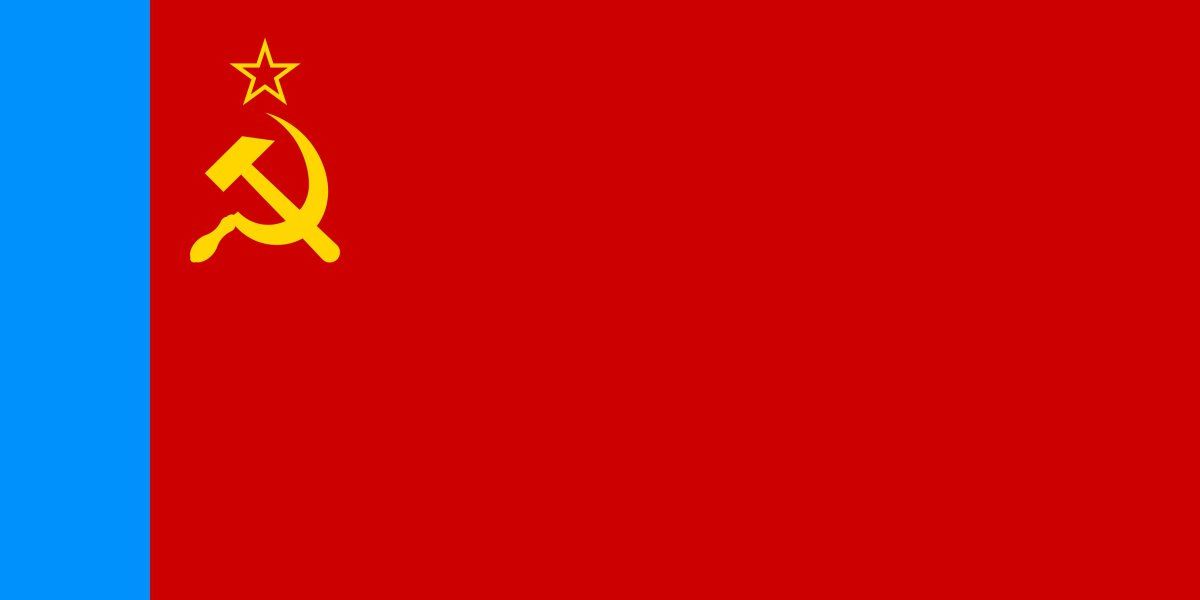
Ukraine: A Comprehensive Overview
Ukraine, officially known as Україна (Ukraïna), pronounced [ʊkrɐˈjinɐ], is a pivotal country situated in Eastern Europe. It holds the distinction of being the second-largest nation on the European continent by area, encompassing a vast expanse of 603,628 square kilometers (233,062 square miles). To its east and north-east, Ukraine shares an extensive border with the Russian Federation, the largest country in Europe. Further borders include Belarus to the north; Poland, Slovakia, and Hungary to the west; and Romania and Moldova to the south. Geographically significant, Ukraine also boasts a substantial coastline along both the Sea of Azov and the Black Sea, providing crucial maritime access. With a population of approximately 40 million people, its capital and largest urban center is Kyiv, a city steeped in historical and cultural significance.
Historical Trajectory of Ukraine
The land that constitutes modern Ukraine has a rich and ancient history, with evidence of human habitation dating back to 32,000 BC. This fertile region became a crucial center for East Slavic culture during the Middle Ages, notably under the powerful state of Kievan Rus'. Flourishing from the 9th to the 13th century, Kievan Rus' was a prominent medieval superpower and the spiritual and cultural precursor to modern Ukraine, Russia, and Belarus. Its legacy includes the adoption of Orthodox Christianity, which deeply shaped the region's identity. However, this influential state met its demise in the 13th century following the devastating Mongol invasion, which left the territory fragmented and vulnerable.
For the subsequent six centuries, the Ukrainian lands became a contested battleground, repeatedly divided and ruled by a succession of powerful external empires. These included the expansive Polish–Lithuanian Commonwealth, the formidable Ottoman Empire, the burgeoning Tsardom of Russia, and later the Austrian Empire and Austria-Hungary. This period of foreign domination profoundly influenced Ukraine's cultural and political development, leaving a complex tapestry of influences. A brief period of significant self-governance emerged in the 17th century with the Cossack Hetmanate in Central Ukraine. This semi-autonomous state, led by its Hetman (military leader), represented a significant stride towards Ukrainian statehood but was ultimately partitioned between Russia and Poland, eventually being fully absorbed into the Russian Empire.
The early 20th century, particularly in the aftermath of the Russian Revolution of 1917, witnessed a powerful resurgence of the Ukrainian national movement. This led to the formation of the Ukrainian People's Republic in 1917, a short-lived attempt at independent statehood. However, this independence was forcibly suppressed, and the territory was reconstituted into the Ukrainian Soviet Socialist Republic (Ukrainian SSR). In 1922, the Ukrainian SSR became a founding member of the Soviet Union (USSR).
The Soviet era brought significant industrialization to Ukraine, making it the most populous and industrialized republic within the USSR after the Russian Soviet Republic. Yet, this period was also marked by profound tragedy. From 1932 to 1933, Ukraine endured the Holodomor, a man-made famine engineered by the Soviet regime that resulted in the deaths of millions of Ukrainians. This event is recognized by many nations as an act of genocide. Further territorial changes occurred in 1939 when Western Ukraine was annexed from Poland by the USSR, consolidating more Ukrainian lands under Soviet control. Ukraine remained a vital, albeit controlled, part of the Soviet Union until its dramatic dissolution in 1991, at which point Ukraine courageously regained its long-sought independence.
Modern Ukraine: Governance, Geopolitics, and Conflict
Since achieving independence in 1991, Ukraine has been governed as a unitary republic operating under a semi-presidential system, where executive power is shared between the president and the prime minister. Initially, Ukraine declared itself a neutral state, maintaining a limited military partnership with Russia and other Commonwealth of Independent States (CIS) countries. However, its foreign policy began to evolve, marked by the establishment of a partnership with NATO in 1994, signaling a growing desire for closer ties with Western security structures.
A pivotal moment in modern Ukrainian history occurred in late 2013 when President Viktor Yanukovych unexpectedly suspended the Ukraine–European Union Association Agreement, opting instead for closer economic alignment with Russia. This decision ignited widespread pro-European and pro-democracy demonstrations known as Euromaidan, centered in Kyiv's Maidan Nezalezhnosti (Independence Square). These mass protests escalated into the Revolution of Dignity, a movement that ultimately led to the overthrow of Yanukovych's government and the formation of a new, pro-Western administration in February 2014. These transformative events served as the immediate background for a series of aggressive actions by the Russian Federation. In March 2014, Russia illegally annexed Crimea, a Ukrainian peninsula, following a widely condemned referendum. The following month, a protracted conflict, known as the War in Donbas, erupted in eastern Ukraine involving Russian-backed separatists. This undeclared war continued for years, severely undermining Ukraine's territorial integrity and sovereignty.
The conflict in Donbas ultimately culminated in Russia's full-scale invasion of Ukraine in February 2022. This unprovoked aggression fundamentally reshaped Ukraine's geopolitical landscape and global security. Amidst this ongoing war, Ukraine has intensified its efforts to forge closer economic, political, and military ties with the West, pursuing membership in the European Union and NATO as crucial steps for its long-term security, prosperity, and democratic consolidation.
Economy and International Engagement
Ukraine is classified as a developing country with a lower-middle-income economy. It ranks 74th in the Human Development Index (HDI), reflecting challenges such as lower life expectancy and persistent issues with widespread corruption, which have been significant barriers to economic progress and investment. Despite these challenges, Ukraine possesses immense economic potential, primarily due to its vast and highly fertile agricultural lands. This makes Ukraine one of the largest grain exporters globally, often referred to as the "breadbasket of Europe," playing a critical role in global food security.
Ukraine is an active participant in various international organizations, underscoring its commitment to multilateral cooperation and its integration into the global community. It is a member of the United Nations (UN), the Council of Europe (focused on human rights, democracy, and the rule of law), and the Organization for Security and Co-operation in Europe (OSCE), which addresses security issues. Regionally, Ukraine is a member of the GUAM Organization for Democracy and Economic Development, the Association Trio (comprising Ukraine, Georgia, and Moldova, all seeking closer integration with the EU), and the Lublin Triangle (a trilateral platform for political, economic, and cultural cooperation between Ukraine, Poland, and Lithuania).
The Russian Soviet Federative Socialist Republic (RSFSR)
The Russian Soviet Federative Socialist Republic (Russian SFSR or RSFSR), known variously as the Russian Soviet Republic, the Russian Socialist Federative Soviet Republic, or informally as Soviet Russia or simply Russia, holds a unique place in 20th-century history. Initially proclaimed as an independent federal socialist state on November 7, 1917, following the October Revolution, it was the world's first constitutionally socialist state guided by communist ideology, adopting its first constitution in 1918.
In 1922, the Russian SFSR was a signatory to the treaty that officially created the Union of Soviet Socialist Republics (USSR). From that point until 1991, the RSFSR became the largest and most populous of the Soviet socialist republics within the USSR, often serving as its political and economic backbone. Towards the end of the Soviet Union's existence, specifically in 1990 and 1991, the RSFSR asserted its sovereignty, declaring the priority of Russian laws over Union-level legislation—a critical step towards its eventual independence. The Russian Republic was structured as a complex federal entity, composed of sixteen smaller constituent units of autonomous republics, five autonomous oblasts, ten autonomous okrugs, six krais, and forty oblasts. Ethnic Russians constituted the largest population group within the republic. Its capital was Moscow, which also served as the capital of the Soviet Union, with other major urban centers including Leningrad (now St. Petersburg), Stalingrad (now Volgograd), Novosibirsk, Sverdlovsk (now Yekaterinburg), Gorky (now Nizhny Novgorod), and Kuybyshev (now Samara).
Economy and Society of the RSFSR
The economy of the Russian SFSR was heavily industrialized, making it the industrial powerhouse of the Soviet Union. It accounted for approximately two-thirds of the electricity produced across the entire USSR, fueling the vast Soviet industrial complex. By 1961, the RSFSR had become the third-largest producer of petroleum globally, trailing only the United States and Saudi Arabia, thanks to significant new discoveries in the Volga-Urals region and Siberia. Beyond its industrial might, the republic also invested heavily in social infrastructure. In 1974, for instance, there were 475 institutes of higher education providing instruction in 47 languages to some 23,941,000 students, showcasing a commitment to widespread education. A comprehensive network of territorially organized public-health services ensured healthcare provision for its populace.
After 1985, under the leadership of General Secretary Mikhail Gorbachev, the Soviet Union embarked on a period of reform known as "Perestroika" (restructuring) and "Glasnost" (openness). These policies aimed to revitalize the Soviet economy, which had become stagnant since the late 1970s under Leonid Brezhnev. Perestroika introduced elements of a market economy, such as allowing non-state owned enterprises like cooperatives, in an attempt to improve efficiency and productivity, ultimately setting the stage for significant economic and political transformations.
Political Evolution and the Dissolution of the USSR
The Russian SFSR's political journey from its founding to its transformation into modern Russia is intricately linked with the fate of the Soviet Union. Its 1978 constitution, like previous Soviet constitutions, theoretically stated that "a Union Republic is a sovereign [...] state that has united [...] in the Union" and that "each Union Republic shall retain the right freely to secede from the USSR." This theoretical right became a potent reality during the collapse of the Soviet Union. On June 12, 1990, the Congress of People's Deputies of the Russian SFSR adopted the Declaration of State Sovereignty. This landmark document asserted the supremacy of Russian laws over Union-level legislation, established a separation of powers (distinct from the traditional Soviet form of government), and formalized Russian citizenship, unequivocally stating the RSFSR's right to freely secede from the USSR.
The democratic reforms continued to gain momentum. On June 12, 1991, Boris Yeltsin (1931–2007), a charismatic figure supported by the Democratic Russia pro-reform movement, was elected as the first and only president of the RSFSR. This post would later transition into the presidency of the Russian Federation.
The fragile Soviet system was irrevocably destabilized by the August 1991 Soviet coup d'état attempt, which saw the brief internment of Soviet President Mikhail Gorbachev by hardline communists. Though the coup failed, it dramatically accelerated the dissolution of the Soviet Union. A pivotal moment occurred on December 8, 1991, when the heads of Russia, Ukraine, and Belarus signed the Belovezh Accords. This historic agreement declared the formal dissolution of the USSR by its original founding states, effectively repudiating the 1922 Treaty on the Creation of the USSR. It simultaneously established the Commonwealth of Independent States (CIS) as a loose confederation of former Soviet republics.
On December 12, 1991, the Supreme Soviet (the parliament of the Russian SFSR) ratified the Belovezh Accords, thereby formally renouncing the Treaty on the Creation of the USSR and de facto declaring Russia's independence from the USSR itself and its ties with the other Soviet Socialist Republics. The final act of the Soviet Union's dissolution occurred on December 25, 1991, following the resignation of Mikhail Gorbachev as President of the Soviet Union. On December 26, the Russian SFSR was officially renamed the Russian Federation. The lowering of the Soviet red flag from the Kremlin Senate building the next day symbolized the end of an era. The USSR was then formally self-dissolved by the Soviet of the Republics, which by that time was the only functioning parliamentary chamber of the All-Union Supreme Soviet. Following this dissolution, the Russian Federation declared itself the successor state to the USSR, assuming its rights and obligations, including its United Nations membership and its permanent seat on the UN Security Council. Initially, it excluded the foreign debt and foreign assets of the USSR, though these were later negotiated. Parts of the former Soviet Army and nuclear weapons remained, for a time, under overall CIS command as the CIS United Armed Forces.
Post-Soviet Constitutional Changes
The 1978 constitution of the Russian SFSR underwent several amendments to reflect the fundamental transition towards democracy, private property rights, and a market economy. Following a significant constitutional crisis in 1993, which involved a power struggle between President Yeltsin and the parliament, a new Russian constitution was adopted. Coming into effect on December 25, 1993, this new constitution completely abolished the Soviet form of government, replacing it with the semi-presidential system that remains in place today, firmly establishing Russia's post-Soviet democratic framework.
Frequently Asked Questions about Ukraine and the Russian SFSR
- What is the capital of Ukraine?
- The capital and largest city of Ukraine is Kyiv.
- What is the Holodomor?
- The Holodomor was a man-made famine in Soviet Ukraine from 1932 to 1933, which resulted in the deaths of millions of Ukrainians. It is widely recognized as an act of genocide by many countries.
- Why is Ukraine considered the "breadbasket of Europe"?
- Ukraine is known as the "breadbasket of Europe" due to its extensive and highly fertile agricultural land, making it one of the world's largest exporters of grain and other agricultural products.
- What was the significance of the Euromaidan protests in Ukraine?
- The Euromaidan protests, which escalated into the Revolution of Dignity, were a series of pro-democracy and pro-European demonstrations in late 2013 and early 2014. They were sparked by the government's suspension of the EU Association Agreement and ultimately led to the overthrow of President Viktor Yanukovych and a shift towards closer ties with the West.
- When did the Russian SFSR become the Russian Federation?
- The Russian SFSR was officially renamed the Russian Federation on December 25, 1991, following the resignation of Mikhail Gorbachev as President of the Soviet Union and just before the formal dissolution of the USSR.
- What role did Boris Yeltsin play in the dissolution of the USSR?
- Boris Yeltsin, as the first elected president of the Russian SFSR, was a key figure in the democratic movement that challenged Soviet central authority. He signed the Belovezh Accords, which effectively dissolved the USSR, and led Russia's transition to an independent state.
- What was "Perestroika"?
- "Perestroika" was a set of political and economic reforms initiated by Soviet leader Mikhail Gorbachev in the mid-1980s. It aimed to restructure the Soviet economy and political system by introducing elements like market mechanisms and greater openness, but ultimately contributed to the weakening and dissolution of the Soviet Union.
- Which countries share a border with Ukraine?
- Ukraine shares land borders with Russia (east and north-east), Belarus (north), Poland (west), Slovakia (west), Hungary (west), Romania (south), and Moldova (south). It also has coastlines along the Sea of Azov and the Black Sea.