English
  español
  français
  português
  русский
  العربية
  简体中文
简体中文 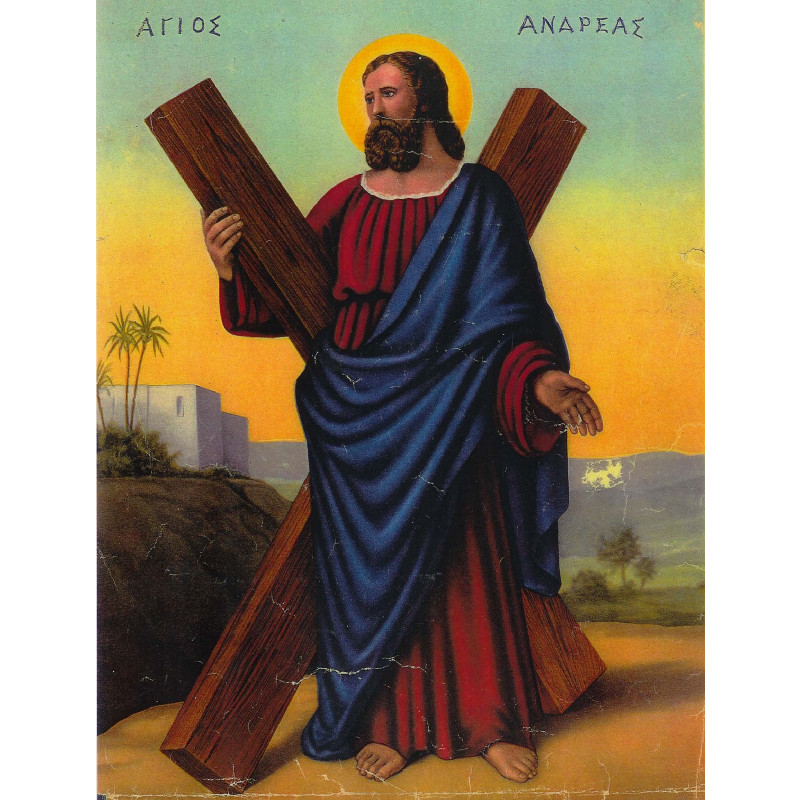
Saint Andrew’s Day, a deeply cherished annual observance, is celebrated with particular warmth and significance on 30 November. While it holds prominence as a national holiday in various European nations, its heart beats most vibrantly in Scotland, where it stands as a cornerstone of national identity and pride.
This day marks the feast day of Saint Andrew, one of the twelve apostles of Jesus Christ and the revered patron saint of Scotland. His profound biblical legacy is rooted in the New Testament, specifically recounted in the Gospel of John (Chapter 1, Verses 40-41). Here, Saint Andrew is depicted as the very first disciple called by Jesus, and notably, he is credited with the pivotal act of introducing his own brother, Simon, who would later become the Apostle Peter, to the Messiah. This act underscores Andrew's role as a bridge-builder and an evangelist, a quality that resonates through his patronage.
Scotland’s Enduring Connection to Saint Andrew
For Scotland, Saint Andrew is far more than just a historical figure; he is intrinsically linked to the nation’s very fabric and spirit. Legend has it that the relics of Saint Andrew were brought to Scotland in the 4th century by Saint Regulus, after a divine vision instructed him to carry them to the ends of the Earth for safekeeping. These relics are said to have landed at a place now known as St Andrews in Fife, which became a significant pilgrimage site and later, the ecclesiastical capital of Scotland. The historical adoption of Saint Andrew as Scotland’s patron saint gained significant traction following the Battle of Athelstaneford in 832 AD, where, according to tradition, a Saltire (an X-shaped white cross on a blue background, representing Saint Andrew’s crucifixion) appeared in the sky, leading the Pictish and Scottish forces to victory. This symbol subsequently became the national flag of Scotland, often cited as the oldest national flag in the world still in use.
Unlike some other national holidays, Saint Andrew’s Day in Scotland is a relatively recent addition to the public holiday calendar, officially designated as such in 2006. This recognition aims to foster greater national pride and provide an opportunity for Scots, both at home and abroad, to celebrate their heritage, culture, and values.
Global Reach: Other Nations Honouring Saint Andrew
Beyond Scotland, Saint Andrew’s influence extends across Eastern Europe and beyond, cementing his status as a widely venerated saint. He is also the patron saint of countries such as Russia, Ukraine, Romania, and Greece. In these nations, his feast day is observed with diverse religious ceremonies, cultural events, and often, specific traditional foods. For instance, in Romania, Saint Andrew’s Day (Sfantul Andrei) is steeped in folklore and customs, with traditions often linked to divination and protection against evil spirits, showcasing a different dimension of his veneration compared to Scotland’s more secular, cultural celebration.
Celebrating Saint Andrew’s Day: Traditions and Festivities
In Scotland, Saint Andrew’s Day is a vibrant expression of Scottish culture, albeit often a more subdued affair than Hogmanay or Burns Night. Celebrations typically include:
- Traditional Scottish Food: Feasting on classic dishes such as Cullen Skink (a creamy smoked haddock soup), Haggis, Neeps, and Tatties (haggis with turnips and potatoes), or shortbread and cranachan for dessert.
- Ceilidhs: Lively social gatherings featuring traditional Scottish folk music, dancing (like the Gay Gordons or Strip the Willow), and storytelling. These events are a wonderful way for communities to come together and celebrate.
- Community Events: Many towns and cities host special markets, parades, and cultural performances, often free to attend, encouraging widespread participation. Historic Scotland also frequently offers free entry to its properties on or around Saint Andrew’s Day, inviting people to explore Scotland’s rich past.
- Focus on Scottish Heritage: The day serves as an occasion to reflect on Scotland’s history, its contributions to the world, and its distinctive cultural identity.
Frequently Asked Questions about Saint Andrew’s DayIs Saint Andrew's Day always a public holiday in Scotland?While it is designated as a national public holiday in Scotland, employers are not legally obliged to give their staff the day off. Some businesses and public services may close, but it's not universally observed in the same way as Christmas or New Year's Day. However, many schools and some workplaces do close, and it is increasingly recognized as a day for national celebration.What is the significance of the Saltire (Saint Andrew's Cross)?The Saltire is the national flag of Scotland, featuring a white X-shaped cross on a blue background. It represents the martyrdom of Saint Andrew, who is believed to have been crucified on an X-shaped cross (crux decussata) in Patras, Greece. Its adoption as Scotland’s national symbol dates back to the 9th century and serves as a powerful emblem of Scottish identity and heritage.How did Saint Andrew become the patron saint of Scotland?The connection dates back to the 4th century with the legend of Saint Regulus bringing relics to Scotland. This link was solidified in the 9th century after a battle where the Saltire reportedly appeared, signifying divine favour. By the 11th century, Saint Andrew was firmly established as Scotland’s patron. The Declaration of Arbroath in 1320, appealing to the Pope for Scottish independence, explicitly invoked Saint Andrew, further cementing his place in the nation’s history.