English
  español
  français
  português
  русский
  العربية
  简体中文
简体中文 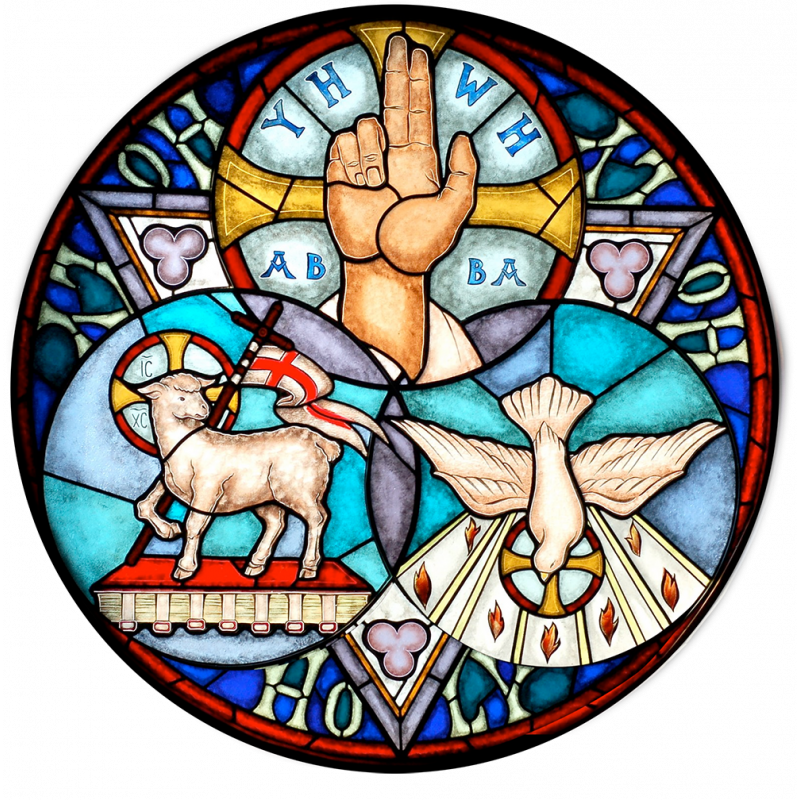
The Christian liturgical calendar marks this particular Sunday with distinct, yet profoundly interconnected, celebrations across its diverse global traditions. In the venerable churches of Oriental Christianity, it is observed as the Sunday of Pentecost, a culmination of the fifty-day Paschal season, celebrating the descent of the Holy Spirit upon the Apostles as described in the Book of Acts.
Conversely, for Western Christian denominations, including Roman Catholicism and various Protestant traditions, this day is recognized as the First Sunday after Pentecost, more commonly known as Trinity Sunday.
Pentecost in Oriental Christianity
For Eastern Orthodox, Coptic, Syriac, Armenian, and other Oriental Christian churches, Pentecost is a paramount feast, often considered the 'birthday of the Church'. It commemorates the dramatic moment when the Holy Spirit, promised by Jesus, empowered the Apostles to miraculously speak in diverse tongues, enabling them to spread the Gospel message to a multitude of people from various nations gathered in Jerusalem. This event signifies the indwelling of God's Spirit within believers and the Church, initiating its universal mission. It marks the conclusion of the Paskha (Paschal) cycle, stretching from Pascha (Easter) to Pentecost, often celebrated with vibrant green vestments and decorations symbolizing new life and spiritual growth.
Trinity Sunday in Western Christianity
In the Western liturgical tradition, the Sunday immediately following Pentecost shifts focus from the outpouring of the Holy Spirit to a comprehensive celebration of the Holy Trinity. Trinity Sunday is dedicated entirely to the Christian doctrine of the Trinity, a foundational belief asserting that God is one God in three co-eternal, co-equal Persons: God the Father, God the Son (Jesus Christ), and God the Holy Spirit. This doctrine is not merely an abstract theological concept but a profound mystery central to understanding God's nature and His relationship with humanity. It encapsulates the core of Christian theology, underpinning beliefs about creation, redemption, and sanctification.
Understanding the Doctrine of the Trinity
The doctrine of the Trinity posits that while there is only one God, this one God eternally exists as three distinct Persons. This is not to suggest three gods, but rather three manifestations of the one divine essence. Consider it like this:
- God the Father: The unbegotten source of all, the Creator and Sustainer.
- God the Son (Jesus Christ): Eternally begotten of the Father, true God and true man, through whom salvation is achieved.
- God the Holy Spirit: Eternally proceeding from the Father (and in Western theology, also from the Son), the divine presence active in the world, sanctifying believers and empowering the Church.
This intricate concept was developed and affirmed over centuries through early Church Councils, notably the First Council of Nicaea in 325 AD, which declared the divinity of Jesus Christ, and later Councils that further defined the nature of the Holy Spirit. Creeds such as the Athanasian Creed eloquently articulate this complex yet essential belief, emphasizing the indivisibility of the divine nature while recognizing the distinct Personhoods.
Why the Difference in Celebration?
The divergence in how this Sunday is named and celebrated largely reflects different theological emphases and historical developments within the various branches of Christianity. For Oriental Christians, Pentecost itself is seen as the full revelation of the Holy Trinity – the Father sending the Spirit in the name of the Son. The celebration of the Trinity is thus intrinsically woven into the Pentecost liturgy. Western Christianity, having concluded its Pentecost celebration the previous day, dedicates a specific Sunday to highlight and reflect upon the Trinity as a distinct, profound theological concept, ensuring that this core doctrine receives focused attention within the annual liturgical cycle.
Frequently Asked Questions about Pentecost and Trinity Sunday
- What is the significance of Trinity Sunday?
- Trinity Sunday is profoundly significant as it celebrates the fundamental Christian doctrine of the Holy Trinity, emphasizing the belief in one God existing as three co-equal and co-eternal Persons: the Father, the Son, and the Holy Spirit. It serves as a dedicated day for reflection on the very nature of God.
- Is Pentecost the same as Trinity Sunday?
- No, they are distinct celebrations, though closely related. In Oriental Christianity, the Sunday is observed as Pentecost, marking the descent of the Holy Spirit. In Western Christianity, the Sunday immediately following Pentecost is Trinity Sunday, explicitly celebrating the doctrine of the Trinity.
- When was the doctrine of the Trinity formally established?
- The core tenets of the Trinitarian doctrine were largely formulated and affirmed through various early Church Councils, most notably the First Council of Nicaea in 325 AD (affirming Christ's divinity) and the First Council of Constantinople in 381 AD (affirming the Holy Spirit's divinity and full personhood). However, the concept was present in Christian thought from the very beginning, stemming from biblical revelation.
- Why do some churches celebrate Pentecost on this Sunday, while others celebrate Trinity Sunday?
- The difference arises from distinct liturgical calendars and theological emphases. Oriental Christian traditions view Pentecost as the culmination of divine revelation, inherently encompassing the Trinity's full manifestation. Western Christian traditions, having observed Pentecost, dedicate the subsequent Sunday to a specific, focused contemplation of the Trinity as a central theological truth.