
 English
  español
  français
  português
  русский
  العربية
  简体中文
简体中文 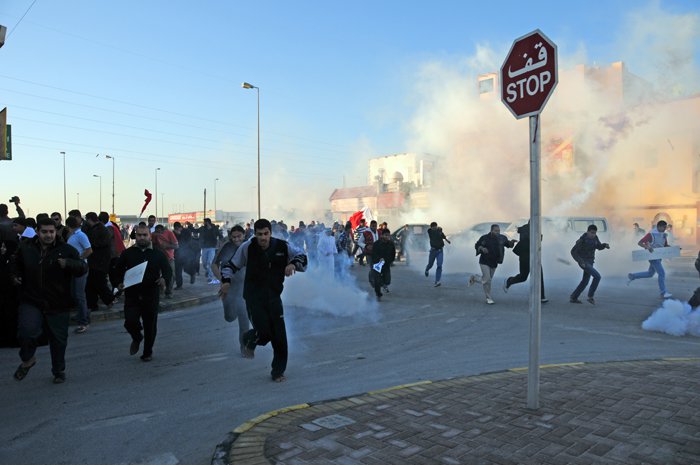
The Arab Spring, known in Arabic as الربيع العربي (ar-Rabīʻ al-ʻArabī), was a pivotal series of anti-government protests, uprisings, and armed rebellions that swept across a significant portion of the Arab world in the early 2010s. This wave of unrest fundamentally challenged entrenched authoritarian regimes and ignited fervent calls for political reform, economic justice, and greater freedoms. Originating from deep-seated public grievances, the movement began as a response to widespread corruption, high unemployment rates, and persistent economic stagnation, which had long suppressed the aspirations of millions.
The Genesis of the Arab Spring: Tunisia's Spark
The catalytic event for the Arab Spring occurred in Tunisia in December 2010. It was ignited by the self-immolation of Mohamed Bouazizi, a street vendor in the town of Sidi Bouzid, whose produce cart was confiscated by municipal authorities. Bouazizi's desperate act became a powerful symbol of the frustration and humiliation faced by ordinary citizens under oppressive systems, resonating deeply with a populace tired of governmental corruption and a lack of dignity. His death on January 4, 2011, propelled the burgeoning protests into a full-scale national uprising.
From Tunisia, where the long-time authoritarian President Zine El Abidine Ben Ali was swiftly deposed, the momentum of the protests rapidly spread through the region, creating a domino effect. Major uprisings and intense social violence, including riots, civil wars, and insurgencies, erupted in five other key countries:
- Libya: Resulting in the overthrow and death of Muammar Gaddafi, who had ruled for over 40 years.
- Egypt: Leading to the resignation of President Hosni Mubarak, a ruler for nearly three decades.
- Yemen: Where President Ali Abdullah Saleh, in power for over 30 years, was eventually forced to step down.
- Syria: Escalating into a protracted and devastating civil war against the regime of Bashar al-Assad.
- Bahrain: Witnessing significant government suppression of a large-scale pro-democracy movement.
Beyond these core nations, sustained street demonstrations and calls for reform also took place in Morocco, Iraq, Algeria, the Iranian province of Khuzestan, Lebanon, Jordan, Kuwait, Oman, and Sudan. Smaller, yet still significant, protests were recorded in Djibouti, Mauritania, Palestine, Saudi Arabia, and the Moroccan-occupied Western Sahara.
A unifying and potent slogan that echoed across the demonstrations in the Arab world was "ash-shaʻb yurīd isqāṭ an-niẓām!" (الشعب يريد إسقاط النظام!), which translates to "the people want to bring down the regime!" This slogan encapsulated the widespread desire for fundamental systemic change, rather than mere superficial reforms.
Understanding the Dynamics: Internal Grievances vs. External Factors
The precise balance between internal grievances and external factors in facilitating the protests' spread and perceived success remains a subject of considerable debate among analysts and historians. While internal factors such as economic hardship, political repression, and demographic pressures (a large youth population with high unemployment) were undoubtedly primary drivers, the role of external influences, including the "demonstration effect" of successful uprisings in neighboring countries and varying degrees of international attention, is also acknowledged as significant.
The Role of Social Media in Mobilization and Suppression
Social media platforms played an unprecedented and dual role during the Arab Spring. On one hand, they were widely heralded as a driving force behind the swift spread of information, allowing activists to organize protests, disseminate news, document human rights abuses, and share inspiring success stories from other countries. This ability to bypass traditional, state-controlled media channels was crucial for rapidly mobilizing populations and fostering a sense of shared purpose.
However, governments quickly recognized social media as a potent tool for dissent and actively sought to inhibit its use. Common tactics included:
- Shutting down specific social media sites or blocking access to popular platforms like Facebook and Twitter.
- Imposing complete Internet service blackouts, particularly in the lead-up to major rallies or during intense periods of protest.
- Accusing content creators and activists of unrelated crimes to justify their arrests and silence their voices.
- Disrupting communication on specific online groups or pages that were instrumental in organizing protests.
This struggle for control over information underscored the strategic importance of digital communication in modern protest movements.
The Turn of the Tide: Violence, Counter-Revolution, and the "Arab Winter"
The initial wave of revolutions and widespread protests began to wane by mid-2012. Many demonstrations were met with increasingly violent responses from state authorities, often supplemented by pro-government militias, counter-demonstrators, and regular military forces. In some instances, protesters also resorted to violence, leading to a dangerous escalation of conflict. This period marked a significant shift from largely peaceful civilian movements to armed confrontations.
The suppression and ensuing power struggles resulted in several large-scale and devastating conflicts across the region:
- The Syrian Civil War: A complex and brutal conflict involving numerous internal and international actors, leading to immense humanitarian suffering and displacement.
- The Rise of ISIL and Insurgency in Iraq: Exploiting the power vacuum and sectarian tensions, the Islamic State of Iraq and the Levant emerged, plunging Iraq into a new civil war.
- The Egyptian Crisis, Coup, and Subsequent Unrest: Following the overthrow of Mubarak, a period of political instability culminated in a military coup in 2013, leading to renewed authoritarianism and an insurgency.
- The Libyan Civil War: After Gaddafi's fall, Libya descended into a fragmented state, with rival governments and militias vying for control, resulting in prolonged conflict.
- The Yemeni Crisis and Civil War: The ousting of Saleh led to a proxy conflict that has devastated the country, triggering one of the world's worst humanitarian crises.
Analysis of these outcomes suggests that regimes lacking significant oil wealth and strong hereditary succession arrangements were often more susceptible to demands for regime change. The immediate aftermath of the Arab Spring saw a continued power struggle, as the initial hopes for democratic transition gave way to counter-revolutionary forces. While leadership changes occurred and some regimes faced increased accountability, the resulting power vacuums created fertile ground for new conflicts and instability across the Arab world.
The early aspirations that these popular movements would usher in an era of reduced corruption, increased political participation, and greater economic equity largely collapsed. This was due to a confluence of factors, including foreign state actors intervening in countries like Yemen, regional and international military interventions in Bahrain and Yemen, and the destructive civil wars that engulfed Syria, Iraq, Libya, and Yemen.
Many observers and affected populations have since referred to the succeeding and still-ongoing conflicts, increased authoritarianism, and general disillusionment as the "Arab Winter," a stark contrast to the initial "Spring" of hope.
The Enduring Legacy and Ongoing Struggles
As of May 2018, out of all the countries affected by the initial Arab Spring uprisings, only Tunisia successfully transitioned to a constitutional democratic governance, largely attributed to a strong civil society, a relatively unified military, and a willingness among political actors to compromise. However, the conditions that ignited the Arab Spring have not entirely faded. Recent uprisings in Sudan and Algeria demonstrate that political movements against authoritarianism and exploitation continue to emerge.
In 2019, multiple protest movements and uprisings in Algeria, Sudan, Iraq, Lebanon, and Egypt were widely seen as a continuation or rekindling of the Arab Spring's spirit, driven by similar grievances regarding corruption, economic hardship, and a lack of political voice.
As recently as 2021, the fallout from the Arab Spring continued to manifest in ongoing conflicts and crises:
- The Syrian Civil War: Continues to cause massive political instability and economic hardship, with the Syrian pound plunging to unprecedented lows, further exacerbating the suffering of the population.
- Libyan Civil War: A major civil war recently concluded, but the country remains fragile, having been a battleground for proxy fighters supported by various Western powers and Russia.
- Yemen's Civil War: Persists as an ongoing humanitarian catastrophe, with millions facing famine and displacement.
- Lebanon's Banking Crisis: A severe economic and financial crisis is threatening the country's economy, with ripple effects on neighboring Syria, highlighting the interconnectedness of the region's challenges.
The Day of Rage in Bahrain: A Case Study
The "Day of Rage," known in Arabic as Yawm al-Ghaḍab (يوم الغضب), is the designation given by protesters in Bahrain to February 14, 2011. This date marked the first day of the national uprising in Bahrain, directly inspired by the successful revolutions in Egypt and Tunisia.
Mobilization and Symbolic Significance
Bahraini youth, leveraging the power of social media websites, played a crucial role in organizing and calling for these protests. They appealed to the Bahraini people to "take to the streets on Monday 14 February in a peaceful and orderly manner," aiming for a nationwide demonstration of dissent. The chosen date held significant symbolic value, coinciding with the ninth and tenth anniversaries of the country's 2002 constitution and the National Action Charter, respectively. These documents were meant to herald a new era of reform but were widely seen by the opposition as insufficient in delivering true democracy and power-sharing.
While some opposition parties openly supported the protest plans, others, though not explicitly calling for demonstrations, echoed the youth's demands for deep reforms and significant political changes, often advocating for a transition to a constitutional monarchy with an elected government and enhanced human rights protections. In anticipation of the protests, the cabinet of Bahrain introduced a number of economic and political concessions, including financial aid to families and the release of some political prisoners, in an attempt to preemptively calm tensions.
Events of February 14, 2011
The spirit of protest in Bahrain had already begun to stir ten days prior to the "Day of Rage," with a sit-in held near the Egyptian embassy in the capital, Manama, expressing solidarity with the Egyptian Revolution of 2011. However, the eve of February 14 saw an early display of state power, as security forces dispersed hundreds of protesters gathering south of Manama.
On February 14 itself, thousands of Bahrainis participated in at least 55 marches across 25 different locations throughout the island nation. These initial protests were largely peaceful, with participants demanding comprehensive reforms. The earliest demonstration commenced at 5:30 a.m. in Nuwaidrat, and the last concluded just minutes before midnight near the Salmaniya Medical Complex, heading towards the iconic Pearl Roundabout, which would later become a focal point of the uprising. The largest single demonstration took place on the island of Sitra.
Security forces responded to the demonstrations with a variety of crowd control measures and force, including firing tear gas, rubber bullets, stun grenades, and birdshot. Tragically, more than 30 protesters sustained injuries, and one individual was killed by birdshot, marking a grim start to the uprising. The Bahraini Ministry of Interior, in turn, stated that a number of security forces were also injured following alleged attacks by groups of protesters.
Frequently Asked Questions about the Arab Spring
- What were the primary causes of the Arab Spring?
- The Arab Spring was primarily caused by widespread public dissatisfaction with authoritarian rule, pervasive governmental corruption, high unemployment rates, stagnant economies, and a general lack of political freedoms and human rights.
- Which countries saw the most significant uprisings during the Arab Spring?
- The most significant uprisings, leading to regime change or major civil conflicts, occurred in Tunisia, Libya, Egypt, Yemen, Syria, and Bahrain.
- How did social media influence the Arab Spring?
- Social media played a crucial role in organizing protests, disseminating information, documenting abuses, and sharing stories of success, helping to mobilize large numbers of people and bypass state-controlled media. Conversely, governments also used various methods to suppress social media use.
- What is meant by the term "Arab Winter"?
- The "Arab Winter" refers to the period following the initial Arab Spring uprisings, characterized by a resurgence of authoritarianism, protracted civil wars, increased instability, economic decline, and humanitarian crises across several countries in the region.
- Which country is considered the sole democratic success story of the Arab Spring?
- Tunisia is widely regarded as the only country that successfully transitioned to a constitutional democratic governance following its Arab Spring uprising.
- Are the conditions that sparked the Arab Spring still relevant today?
- Yes, recent uprisings and protests in countries like Sudan, Algeria, Iraq, and Lebanon indicate that the underlying grievances of authoritarianism, corruption, and economic hardship continue to fuel political movements in the Arab world.