English
  español
  français
  português
  русский
  العربية
  简体中文
简体中文 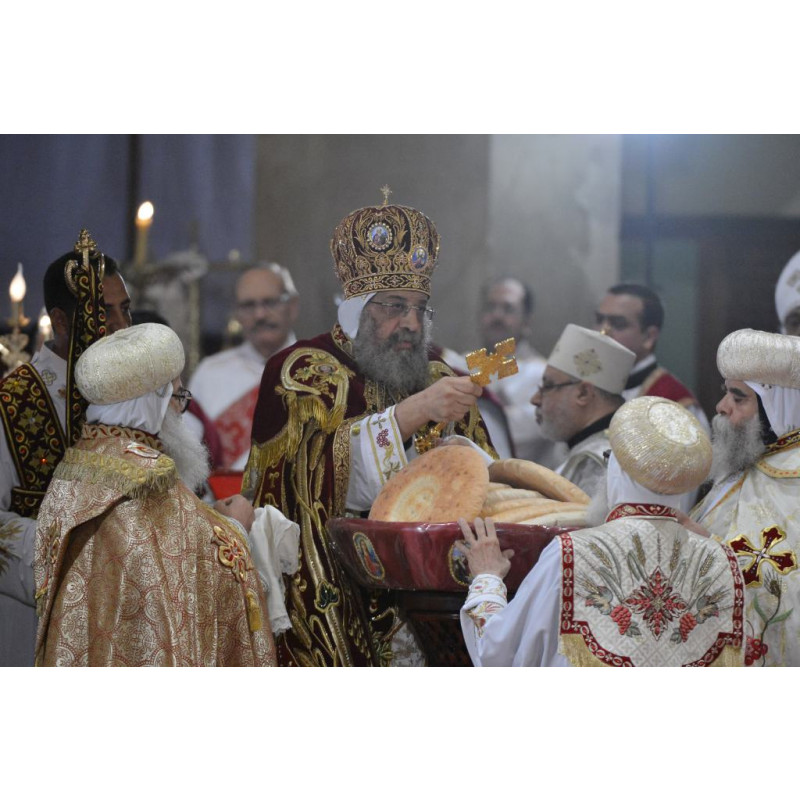
In the vibrant tapestry of Egyptian society, the overwhelming majority of Christians identify as Copts, belonging to the venerable Coptic Orthodox Church. This ancient Christian community boasts roots stretching back to the earliest days of Christianity, directly descended from the indigenous inhabitants of ancient Egypt. The term "Coptic" itself is derived from the Greek "Aigyptios," meaning "Egyptian," underscoring their deep historical and cultural connection to the land of the Nile. As one of the oldest Christian denominations globally, the Coptic Orthodox Church plays a pivotal role in preserving the unique spiritual, linguistic, and artistic heritage of Egyptian Christianity, led by the Pope of Alexandria and Patriarch of the See of Saint Mark, a lineage tracing back to Saint Mark the Apostle himself, who is believed to have brought Christianity to Egypt in the first century AD. This resilient community, estimated to represent 10-15% of Egypt's population, has steadfastly maintained its faith and traditions through centuries of change, embodying a profound sense of identity and continuity.
A notable and distinctive tradition for Christians in Egypt, particularly Coptic Orthodox adherents, is the celebration of Christmas on January 7th, rather than December 25th. This observance aligns with the ancient Julian calendar, which predates the widely adopted Gregorian calendar by several centuries. The shift from December 25th to January 7th is a direct consequence of the 13-day difference that has accumulated between the two calendar systems since the Gregorian calendar was introduced by Pope Gregory XIII in 1582 to correct inaccuracies in the Julian system, primarily concerning the date of Easter. For many Orthodox churches, preserving the traditional Julian calendar for fixed feasts like Christmas is a matter of maintaining continuity with their deeply rooted historical practices and liturgical heritage.
Global Adherence to the Julian Calendar for Christmas
While the majority of the world celebrates Christmas on December 25th, the January 7th tradition, rooted in the Julian calendar, is indeed followed by a significant, albeit smaller, segment of the global Christian population. This includes several other autocephalous (self-governing) Orthodox Churches, demonstrating a shared commitment to an older calendrical standard. Beyond Egypt, prominent examples include:
- Ethiopian Orthodox Tewahedo Church: Ethiopia, with its deeply intertwined Christian history with Egypt, shares this tradition, celebrating Ganna (Christmas) on January 7th.
- Eritrean Orthodox Tewahedo Church: Following its ecclesiastical separation from the Ethiopian Church, it also maintains the Julian calendar for Christmas.
- Russian Orthodox Church: One of the largest Orthodox Churches globally, the Russian Orthodox Church, along with many of its adherents worldwide, celebrates Christmas on January 7th.
- Serbian Orthodox Church: A significant Orthodox body in the Balkans, the Serbian Church similarly adheres to the Julian calendar for its Christmas celebrations.
- Georgian Orthodox Church: In the Caucasus, the Georgian Orthodox Church also observes Christmas on January 7th.
- Ukrainian Orthodox Church (some branches): While there has been some movement towards the Revised Julian or Gregorian calendars, a substantial portion of Ukrainian Orthodoxy continues to use the Julian calendar for Christmas.
- The Jerusalem Patriarchate: Even within the Holy Land, the Greek Orthodox Patriarchate of Jerusalem continues to use the Julian calendar for fixed feasts, including Christmas.
- Monasteries on Mount Athos: The monastic community of Mount Athos, a spiritual heartland for Eastern Orthodoxy, also follows the Julian calendar.
These churches prioritize historical continuity and a shared liturgical calendar that many perceive as closer to the original calculations of the early church, creating a unique and profound connection to the past for millions of believers worldwide.
Frequently Asked Questions About Coptic Christmas
- Why do Copts celebrate Christmas on January 7th?
- Copts celebrate Christmas on January 7th because the Coptic Orthodox Church, like several other Oriental and Eastern Orthodox Churches, continues to use the Julian calendar for fixed religious feasts. The 13-day difference between the Julian calendar and the Gregorian calendar (which most of the world uses) means that December 25th on the Julian calendar falls on January 7th on the Gregorian calendar.
- What is the Coptic Orthodox Church?
- The Coptic Orthodox Church is one of the oldest Christian denominations in the world, tracing its origins to Saint Mark the Apostle in the 1st century AD. It is an Oriental Orthodox Church, distinct from Eastern Orthodox and Roman Catholic Churches, and is the predominant Christian church in Egypt, serving as a pillar of Coptic identity and culture.
- Is Christmas a major holiday for Copts?
- Yes, Christmas (known as "Eid Al Milad" in Arabic) is a major and joyous holiday for Copts. It is preceded by a 43-day Advent fast, known as the "Nativity Fast," where adherents typically abstain from meat, dairy, and eggs. The Christmas Eve liturgy is a long and solemn service that often concludes at midnight or in the early hours of Christmas morning, followed by celebratory meals with family and friends.
- Are there other Christian denominations in Egypt?
- While the Coptic Orthodox Church represents the vast majority of Christians in Egypt, there are also smaller communities belonging to the Coptic Catholic Church, various Protestant denominations (such as Evangelical and Presbyterian), and other Orthodox churches like the Greek Orthodox Church of Alexandria, though their numbers are comparatively much smaller.