English
  español
  français
  português
  русский
  العربية
  简体中文
简体中文 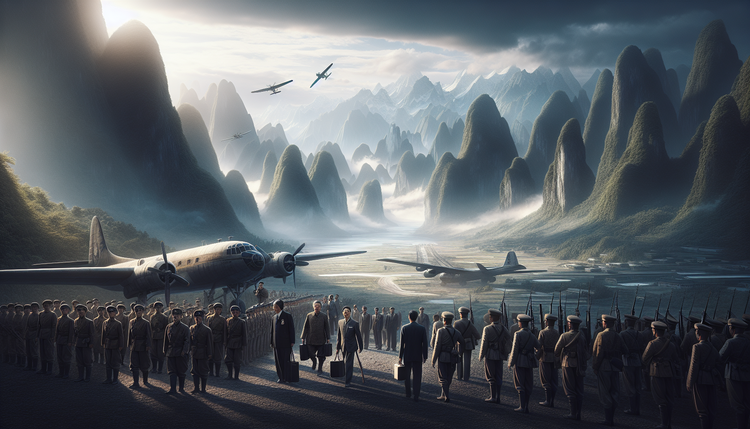
In February 1972, United States President Richard Nixon made a landmark visit to the People's Republic of China (PRC), ending more than two decades of diplomatic isolation and initiating a careful normalization of Sino-American relations. The trip was a calculated Cold War move that helped rebalance global power, reduce tensions with the Soviet Union, and ultimately set the foundation for the deep—if wary—interdependence that defines U.S.–China relations in the 21st century. From strategic diplomacy to economic integration, Nixon’s opening to China remains one of the most consequential foreign policy decisions in modern history.
- Event: Nixon’s state visit to China (February 21–28, 1972)
- Key document: The Shanghai Communiqué
- Strategic goals: Exploit the Sino–Soviet split, seek leverage in Vietnam talks, and build a framework for U.S.–China normalization
- Long-term impact: Laid groundwork for diplomatic relations (established in 1979) and decades of economic integration
Why Richard Nixon Went to China
By the late 1960s, the United States and China had been adversaries for twenty years. Washington backed the Republic of China (Taiwan) after the Chinese Civil War, faced Chinese forces on the Korean peninsula, and refused to recognize the Communist government in Beijing. But the strategic landscape was changing. Relations between China and the Soviet Union had ruptured, punctuated by border clashes in 1969. Nixon and his national security adviser, Henry Kissinger, saw an opportunity: bring Beijing into a tactical alignment with Washington to counterbalance Moscow and unlock new leverage in Cold War diplomacy.
Nixon also sought an exit from the Vietnam War on more favorable terms. Engaging China—North Vietnam’s key patron—could pressure Hanoi to negotiate. At home, the dramatic opening promised to showcase presidential leadership and reset American foreign policy after a turbulent decade.
The Road to Beijing: From Ping-Pong to Secret Talks
The opening unfolded through a series of carefully choreographed steps:
- Ping-Pong diplomacy (1971): A surprise invitation for the U.S. table tennis team to visit China created goodwill and signaled Beijing’s willingness to engage.
- Backchannel diplomacy: Pakistan served as a key intermediary. In July 1971, Henry Kissinger made a secret trip to Beijing, meeting Premier Zhou Enlai and paving the way for a presidential visit.
- Policy shifts: The U.S. eased travel restrictions and export controls. Meanwhile, the United Nations admitted the PRC in October 1971, replacing Taiwan’s seat—an important backdrop to Nixon’s move.
Nixon’s 1972 China Visit: A Week That Changed the World
Nixon arrived in Beijing on February 21, 1972. Television images of the American president shaking hands with Zhou Enlai at the airport symbolized a historic turn; Eisenhower’s secretary of state, John Foster Dulles, had famously refused Zhou’s handshake at Geneva in 1954. Nixon also met Chairman Mao Zedong in a brief but highly symbolic session.
Key moments of the trip
- Beijing meetings: Strategic discussions centered on the Soviet threat, Taiwan, Vietnam, and the broader architecture of Asian security.
- Cultural optics: Banquets at the Great Hall of the People and tours in Beijing, Hangzhou, and Shanghai projected mutual respect and cultural curiosity.
- The Shanghai Communiqué (February 28): The visit concluded with a foundational statement that recorded areas of agreement and difference.
The Shanghai Communiqué: What It Said and Why It Mattered
- Taiwan language: The United States acknowledged that all Chinese on both sides of the Taiwan Strait maintain there is but one China, and stated that the U.S. does not challenge that position. Washington affirmed the ultimate goal of a peaceful settlement by the Chinese themselves.
- Opposing hegemony: Both sides opposed hegemony in Asia (a careful nod to concerns about Soviet dominance).
- People-to-people ties: Commitments to expand cultural, scientific, and journalistic exchanges helped normalize contact.
- Trade openings: Though limited at first, the communiqué pointed toward gradual economic engagement.
Crucially, the communiqué allowed both sides to put their positions on record without forcing immediate resolution of disputes, especially over Taiwan. It set a pragmatic template: cooperate where interests align; manage differences where they do not.
Immediate Outcomes: Triangular Diplomacy and Vietnam
Nixon’s opening to China reshaped global diplomacy almost overnight. The United States exploited triangular dynamics to gain leverage with the Soviet Union, culminating in 1972 with the SALT I agreement and the Anti-Ballistic Missile (ABM) Treaty. The message was clear: Washington could engage both communist giants—and play them off one another—to reduce nuclear tensions.
On Vietnam, progress came more slowly. While Beijing encouraged negotiations, it also continued supporting North Vietnam. Still, the opening helped nudge all parties toward talks that ultimately produced the 1973 Paris Peace Accords and the end of U.S. combat operations.
From Opening to Normalization (1972–1979)
After the 1972 breakthrough, the two countries set up liaison offices (1973) and expanded exchanges. Formal diplomatic relations were not established until January 1, 1979, under President Jimmy Carter, who recognized the PRC as the sole legal government of China. The United States ended its mutual defense treaty with Taiwan but enacted the Taiwan Relations Act (1979), committing to provide defensive arms to Taipei and to maintain the capacity to resist coercion, while upholding a "one China" policy and a posture of strategic ambiguity.
Since Nixon’s visit, every U.S. president—except Jimmy Carter—has traveled to China while in office, reinforcing the continuity and significance of the relationship despite periodic downturns.
Economic Engagement and the Rise of Interdependence
The strategic opening laid the groundwork for economic normalization. Beginning in the late 1970s and accelerating after Deng Xiaoping’s reforms, trade and investment ties expanded steadily:
- Trade growth: From negligible volumes in the 1970s, U.S.–China trade ballooned into the hundreds of billions by the 2010s, making each a top trading partner for the other.
- WTO accession: China’s entry into the World Trade Organization in 2001 catalyzed integration into global supply chains and accelerated export-led growth.
- Financial ties: China became one of the largest foreign holders of U.S. Treasury securities—second after Japan as of 2021—highlighting deep financial interdependence.
As of 2021, the United States had the world’s largest economy by nominal GDP and China the second largest (with China surpassing the U.S. on a purchasing-power-parity basis). This economic convergence magnified the relationship’s global importance—and its frictions.
Cooperation and Rivalry in the 21st Century
Analysts and leaders often describe U.S.–China ties as the most consequential bilateral relationship of the 21st century. It combines mutual dependence with strategic competition.
Areas of cooperation
- Nonproliferation and regional stability: Managing North Korea’s nuclear program and preventing nuclear spread.
- Global challenges: Public health coordination at times, climate change negotiations (including steps toward the Paris framework), and anti-piracy operations.
Points of tension
- Security and maritime disputes: The South China Sea remains a flashpoint. China claims broad sovereignty, while the U.S. conducts freedom of navigation operations and views the waters as international commons.
- Technology and cyber: Rivalry over next-generation technologies, cyber intrusions, and export controls has intensified.
- Human rights and governance: U.S. concerns include Xinjiang, Hong Kong, and the role of democratic freedoms, while China rejects foreign criticism and has adopted a more assertive “wolf warrior” diplomatic posture.
- Trade and investment: Tariffs, market access, supply chain security, and restrictions on sensitive technologies became central debates, especially after 2018.
Public perceptions have hardened. In a 2020 Pew Research Center survey, 73% of Americans held an unfavorable view of China, with only 22% favorable. Surveys within China reflected a corresponding decline in views of the U.S. These trends complicate policymaking on both sides.
Nixon’s Broader Presidency: Context for the Opening
Richard Milhous Nixon (1913–1994), the 37th U.S. president, served from 1969 to 1974. A California lawyer and a veteran of Congress and the vice presidency, he rose to prominence as an anti-communist during the early Cold War. As president, Nixon pursued détente with both the Soviet Union and China, oversaw the end of U.S. combat operations in Vietnam (1973), and presided over the Apollo 11 Moon landing, the creation of the Environmental Protection Agency, and landmark domestic policies ranging from school desegregation enforcement to the Clean Air Act amendments.
His second term, however, collapsed under the weight of the Watergate scandal. Facing almost certain impeachment and removal, he resigned on August 9, 1974—the only U.S. president to do so. In retirement, he wrote extensively on foreign policy and gradually rehabilitated his image as an elder statesman. Historians rate his presidency as below average overall, but they widely regard the opening to China as a strategic masterstroke.
Why Nixon’s Opening Still Matters
Nixon’s 1972 visit did not solve the most difficult issues in U.S.–China relations. It did something more durable: it created a framework for engagement amid profound disagreement. That framework enabled formal ties in 1979, sustained cooperation on select global challenges, and underwrote an era of rapid economic integration that reshaped the world economy.
Today’s U.S.–China relationship is a mixture of close economic ties and hegemonic rivalry in the Asia–Pacific. Managing it requires balancing competition with guardrails—precisely the method embedded in the Shanghai Communiqué. For policymakers and business leaders alike, understanding Nixon’s opening is essential to navigating the most important bilateral relationship of the 21st century.
Key Takeaways
- Nixon’s 1972 visit to China was a strategic pivot that leveraged the Sino–Soviet split.
- The Shanghai Communiqué set the tone for cooperation without consensus on core disputes, especially Taiwan.
- Normalization followed in 1979, with the Taiwan Relations Act defining ongoing U.S. commitments to Taiwan.
- Economic ties expanded dramatically after 1980, even as strategic rivalry persisted and later intensified.
- Despite tensions, both nations have shared interests in stability, nonproliferation, and global economic health.
FAQ
Why did Richard Nixon decide to visit China in 1972?
He aimed to reshape Cold War dynamics by engaging Beijing amid the Sino–Soviet split, gain leverage in arms control talks with Moscow, and secure a better negotiating position to end the Vietnam War. The opening also promised to reduce the risk of great-power conflict in Asia and reposition U.S. diplomacy after a turbulent decade.
What was the Shanghai Communiqué, and what did it achieve?
Issued at the end of Nixon’s trip, the Shanghai Communiqué recorded areas of agreement and disagreement, including careful language on Taiwan, opposition to hegemony in Asia, and commitments to expand exchanges. It established a workable framework for engagement without forcing immediate resolution of core disputes, enabling steady progress toward normalization.
How did Nixon’s opening affect the Soviet Union?
It strengthened U.S. leverage in superpower diplomacy. By engaging China, Washington signaled to Moscow that it had strategic alternatives, helping facilitate détente, the SALT I accord, and the ABM Treaty in 1972. The triangular balance reduced nuclear tensions and reshaped global alignments.
When did the U.S. establish formal diplomatic relations with the PRC?
On January 1, 1979, under President Jimmy Carter. The U.S. recognized the PRC as the sole legal government of China, ended its mutual defense treaty with Taiwan, and Congress passed the Taiwan Relations Act to sustain robust unofficial ties and defensive support for Taiwan.
How did the opening lead to economic integration?
The 1972 visit initiated limited exchanges and trade pathways. Over the 1980s and 1990s—especially after China’s 2001 WTO accession—U.S.–China trade and investment surged, embedding both economies in shared supply chains. China became a major holder of U.S. Treasury securities and a central player in global manufacturing and technology value chains.
What are the main sources of U.S.–China tension today?
Key flashpoints include the South China Sea, Taiwan’s security, technology and cyber competition, human rights concerns, and trade and investment restrictions. While both sides still cooperate on select issues like nonproliferation and climate, strategic rivalry has sharpened.
Did Nixon’s opening succeed in its goals?
Yes, by the metrics of the time. It diluted Soviet power, improved U.S. negotiating leverage, and set in motion a long-term diplomatic and economic relationship with China. The opening did not eliminate disagreements—especially over Taiwan and governance—but it created durable mechanisms to manage them.