English
  español
  français
  português
  русский
  العربية
  简体中文
简体中文 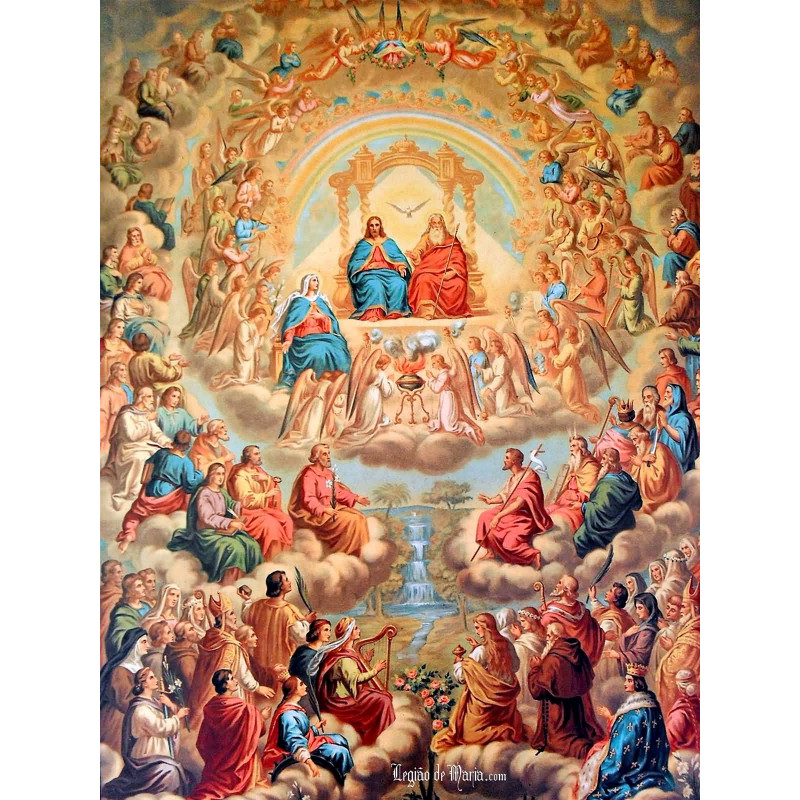
Christians worldwide observe a significant and deeply cherished festival known as All Saints’ Day, also widely referred to as All Hallows’ Day or Hallowmas. This special occasion is dedicated to honoring and commemorating all the saints – not only those officially canonized by the Church, but also the countless faithful departed who are believed to be in heaven. It's a day to remember the spiritual community of the Church Triumphant, recognizing their exemplary lives and their continued intercession.
Historically, the origins of All Saints' Day can be traced back to the early Christian Church's practice of remembering martyrs. Over time, as the number of martyrs grew and then extended to all holy men and women, the need for a collective commemoration emerged. Pope Boniface IV, in the early 7th century (around 609 AD), consecrated the Pantheon in Rome to the Virgin Mary and all martyrs, initiating a feast day. Later, in the 8th century, Pope Gregory III consecrated an oratory in St. Peter's Basilica to all saints and fixed its observance on November 1st. This date gradually became the standard for many Western Christian traditions.
Western Christian Observance: November 1st
In many Western Christian denominations, All Saints’ Day is habitually celebrated on the first day of November. This date holds particular cultural significance as it immediately follows All Hallows’ Eve (October 31st), popularly known as Halloween, and precedes All Souls’ Day (November 2nd). Together, these three days form what is sometimes called "Hallowtide," a period focused on remembrance of the dead, both the saints in heaven and the faithful departed. Prominent Western churches that observe All Saints' Day on November 1st include:
- The Roman Catholic Church: For Catholics, it is a Holy Day of Obligation in many countries, emphasizing the universal call to holiness and the communion of saints.
- Major Protestant Denominations: Many Protestant churches, while not always observing it as a formal holiday of obligation, nonetheless commemorate the day. This includes denominations such as:
- The Methodist Church
- The Anglican Communion (including the Church of England and the Episcopal Church)
- The Lutheran Church
- Certain Presbyterian and other Reformed traditions
These churches use the day to reflect on the lives of Christian exemplars and the concept of the "saints" as all believers who have gone before them in faith.
Eastern Christian Observance: The Sunday After Pentecost
Conversely, Eastern Christian churches adhere to a different liturgical calendar for All Saints’ Day, typically holding it on the first Sunday following Pentecost. This timing is deeply theological, linking the celebration of all saints directly to the descent of the Holy Spirit and the establishment of the Church. It emphasizes that the saints are the fruits of the Holy Spirit's work within the Church. Churches that observe All Saints' Day on this specific Sunday include:
- The Eastern Orthodox Church: This is the predominant observance for Orthodox Christians, recognizing all saints from Adam until the present day as part of the unified body of Christ.
- Eastern Catholic Churches: Many Eastern Catholic churches, which are in full communion with the Pope but retain their distinct Eastern rites and traditions, also follow this date. Examples include the Greek Catholic Church, the Melkite Greek Catholic Church, and others that follow the Byzantine Rite.
- Byzantine Lutheran Churches: Although smaller in number, some Lutheran traditions that adhere to the Byzantine Rite also follow this Eastern dating.
Oriental Orthodox and Chaldean Observance
A unique observance pattern is found among certain Oriental Orthodox churches. For instance, the Oriental Orthodox churches of Chaldea, most notably the Chaldean Catholic Church (an Eastern Catholic Church that follows the East Syriac Rite), celebrate All Saints’ Day on the first Friday subsequent to Easter. This distinct placement connects the commemoration of saints directly to the Paschal Mystery – Christ's suffering, death, and resurrection – emphasizing that their holiness and eternal life are derived from His victory over death.
Why the Different Dates?
The divergence in dates for All Saints' Day across Christian traditions is primarily rooted in historical liturgical development and theological emphasis:
- Western Tradition (November 1st): This date was solidified in the West, potentially influenced by pre-Christian harvest festivals or simply chosen for convenience and distinctness from earlier observances of martyr commemorations. It forms a theological and cultural bridge to the remembrance of all the dead.
- Eastern Tradition (Sunday after Pentecost): This timing highlights the saints as manifestations of the Holy Spirit's work and the Church's establishment. It is a logical progression from Pentecost, celebrating the "first fruits" of the Church's evangelization.
- Chaldean Tradition (Friday after Easter): This unique date underscores the centrality of Christ's resurrection as the source of all sanctification and the hope of eternal life for the saints.
What is the Significance of All Saints' Day?
- What is the primary purpose of All Saints' Day?
- The primary purpose is to honor and remember all Christian saints, both known and unknown, who are believed to be in heaven. It celebrates the "communion of saints" – the spiritual unity of believers on Earth, in purgatory, and in heaven.
- Is All Saints' Day a public holiday?
- While it is a significant religious observance, particularly for Catholics (often a Holy Day of Obligation), its status as a public holiday varies by country. Many historically Catholic European and Latin American countries observe it as a public holiday.
- How is All Saints' Day different from All Souls' Day?
- All Saints' Day (November 1st) commemorates all the saints in heaven, who are believed to have attained beatific vision. All Souls' Day (November 2nd) is dedicated to praying for all the faithful departed who are believed to be in purgatory, undergoing purification before entering heaven. While distinct, they are closely related and often seen as complementary.
- Do all Christian denominations observe All Saints' Day?
- Most major Christian denominations acknowledge the concept of saints, but the formal observance of All Saints' Day as a specific liturgical feast varies. It is most prominent in Catholic, Orthodox, Anglican, and some Lutheran traditions, while many other Protestant churches may focus more broadly on the lives of exemplary Christians throughout the year.
All Saints' Day, regardless of its specific date or denominational nuances, serves as a powerful reminder of the enduring legacy of faith, hope, and charity exemplified by those who have gone before. It invites believers to reflect on their own call to holiness and the ultimate destination of eternal life with God.